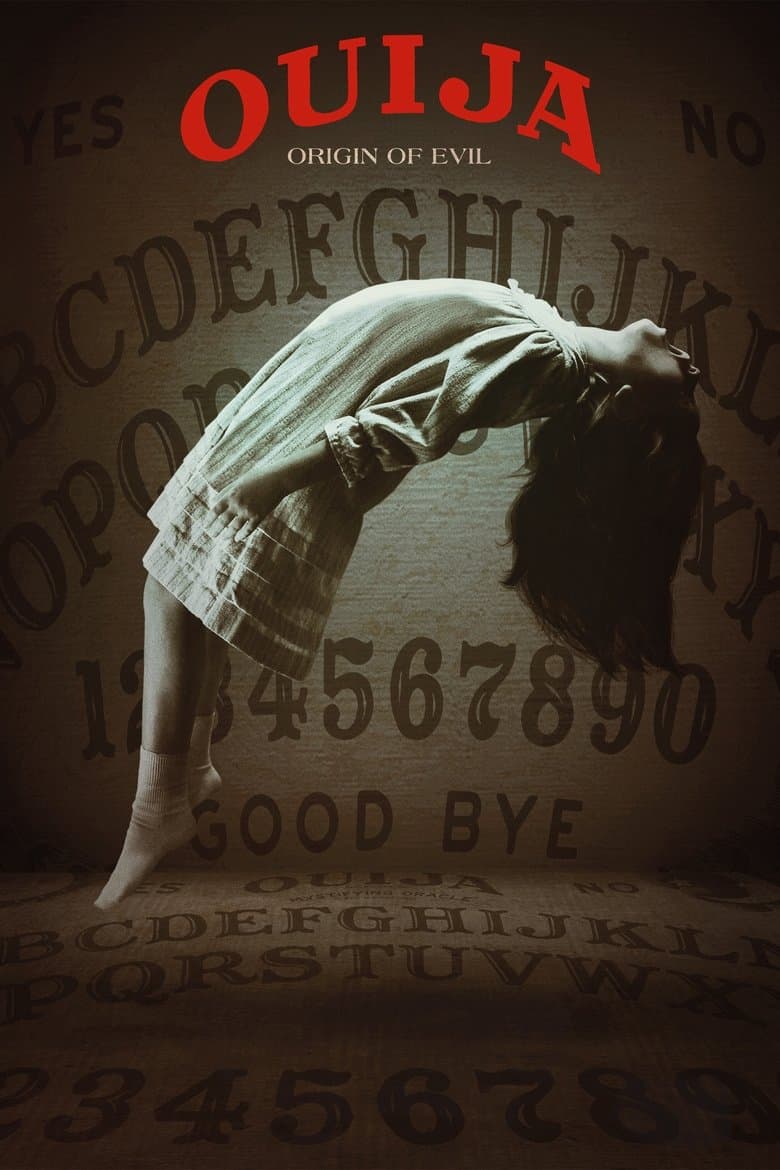
In 1967 Los Angeles, widowed Alice Zander and her daughters Lina and Doris run a fake séance business while they grieve Roger’s death. They bring in a Ouija board, and real spirits enter the home. The main threat comes from victims of a sadistic Nazi doctor who once ran basement experiments, and those spirits possess Doris. Father Tom, a priest and school principal, tries to help the family. The climax is classic possession and family tragedy, and the film links as a prequel to the earlier Ouija story. The core themes are grief, fraud used as comfort, haunted house style possession, and wartime atrocity as ghost lore.
The film shows almost no modern identity politics. Dialogue stays on séances, grief, possession rules, and the house’s wartime secrets rather than activist talking points. The female led household follows the widow and daughters premise, not empowerment messaging. Father Tom is a competent and sympathetic helper, not a target of anti Christian ridicule. The Nazi doctor past is historical horror, not a present day lecture about systems of power. Viewers screening for identity or activist content will find very little of that here.
Community feedback
Was our 7% Woke rating accurate?
Breakdown
These are the editorial factors and ratings behind our score for Ouija: Origin of Evil.
Woke representation / casting
Not present. 1967 LA suburban family and supporting players read as ordinary for setting and plot, with no quota style ensemble, race or gender swaps of known figures, or casting sold as a diversity statement.
0%
Woke political dialogue
Not present. Dialogue centers on séances, grief, possession rules, and the house’s wartime secrets, with no modern activist, DEI, identity, or culture war talking points.
0%
Identity-driven story themes
Not present. Core story is family trauma and supernatural possession, with spirits seeking a voice as horror mechanics and Nazi doctor lore as historical atrocity horror, not present day identity politics or empowerment messaging.
0%
Western institutional / cultural critique
There is barely any critique of Western institutions. Father Tom is a competent, kind helper and later a victim, not a joke aimed at the church. The séance scam calls out con artistry and using grief for money, not traditional roles or conservative norms as bad ideology. At most someone could read soft doubt about spiritual comfort, and even that is not activist framing.
5%
Woke character or canon changes
Not relevant. as a prequel that expands franchise mythology with an original 1967 family story and no identity driven rewrite of established characters or historical figures.
0%
Anti-woke backlash and complaints
Not present. No meaningful anti-woke or agenda controversy found, with discussion on craft, scares, and being better than the first Ouija film.
0%
Creator track record context
Available context paints Flanagan as the main creative voice, known for grief and character focused horror. His broader work shows only mild interest in social themes, and this film does not center that. Jeff Howard and most producers sit in a mild range as well. Overall the package reads mild, not activist led for this title.
20%
Production
Movie · 2024
A live broadcast of a late-night talk show in 1977 goes horribly wrong, unleashing evil into the nation's living rooms.
Movie · 2017
Several years after the tragic death of their little girl, a doll maker and his wife welcome a nun and several girls from a shuttered orphanage into their home, soon becoming the…
Movie · 2023
Still reeling from the tragic death of their mother, a teenage girl and her younger sister find themselves plagued by a sadistic presence in their house and struggle to get their…
Movie · 2025
Paranormal investigators Ed and Lorraine Warren take on one last terrifying case involving mysterious entities they must confront.
Movie · 2016
Rebecca must unlock the terror behind her little brother's experiences that once tested her sanity, bringing her face to face with a supernatural spirit attached to their mother.

Movie · 2022
A year after the Miles County massacre, Art the Clown is resurrected by a sinister entity. Art returns home, where he must hunt down and destroy teenage Sienna and her younger…
Movie · 2025
Following the death of their father, a brother and sister are sent to live with a foster mother, only to learn that she is hiding a terrifying secret.
Movie · 2017
Though Kevin has evidenced 23 personalities to his trusted psychiatrist, Dr. Fletcher, there remains one still submerged who is set to materialize and dominate all the others.
