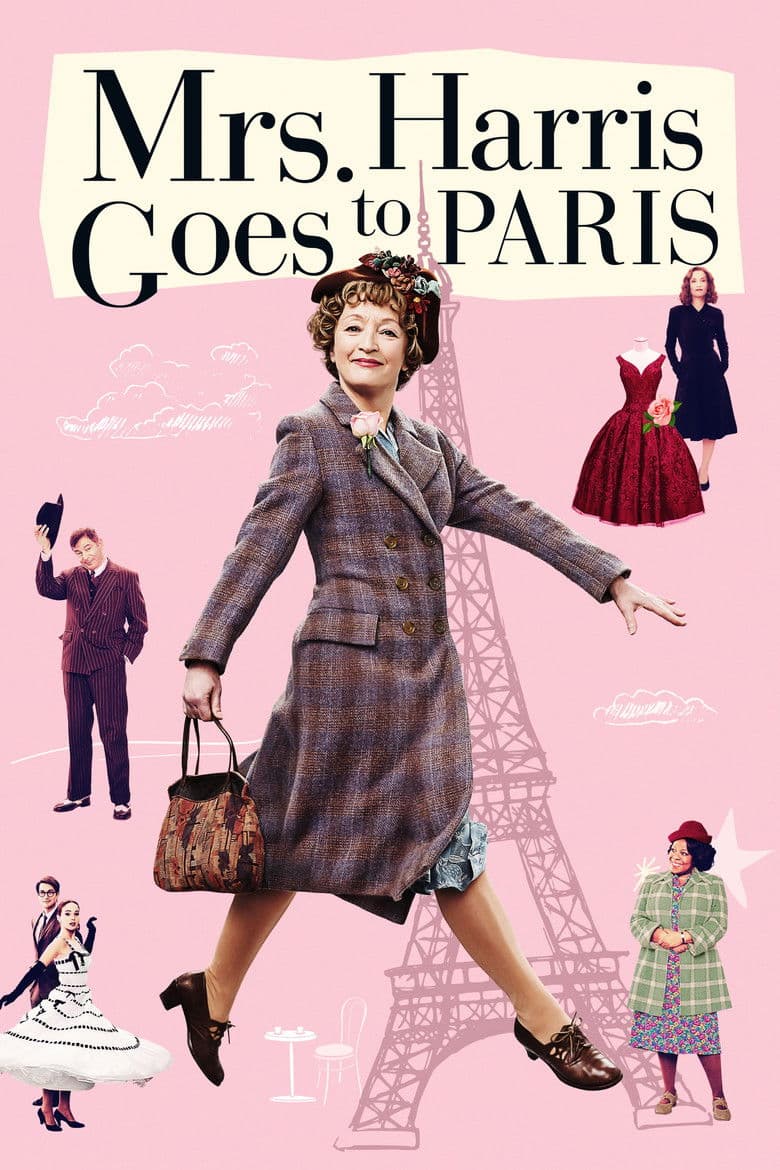
Ada Harris is a kind cleaning lady in 1950s London. She sees a fancy Christian Dior dress at a rich client's house and falls in love with it. She saves, gambles, and works hard so she can go to Paris and buy one of her own. The film is warm, light, and fairy-tale like, with pretty clothes and a hopeful tone.
A normal viewer mostly sees a sweet story about dreams, class, and kindness. The clearest “modern” notes are light diversity casting in a 1950s setting (Ada’s black best friend Vi, mixed race runway models, and a few gay or gay-coded fashion-house figures), plus a worker strike Ada helps lead so Dior treats staff better and sells clothes to ordinary people. Those parts show up, but they do not take over the dress-quest plot. Anti-woke anger stayed small and niche.
Community feedback
Was our 51% Woke rating accurate?
Breakdown
These are the editorial factors and ratings behind our score for Mrs. Harris Goes to Paris.
Woke representation / casting
Clear modern diversity in a 1950s story: black best friend Vi in a big supporting role, other black London faces, mixed-race Dior models, plus gay or gay-coded fashion figures. Not a full “quota lead” takeover, but easy for viewers to notice as period casting that looks like today’s representation priorities.
40%
Woke political dialogue
Talk is mostly about class snobs, kindness, and chasing a dream. The strike and “fashion for regular people” scenes add mild labor/class politics. No long modern race, gender, or identity lectures.
26%
Identity-driven story themes
Core arc is a working-class woman wanting beauty, respect, and a dress. Side beats cover aging women feeling unseen, worker solidarity, and light queer presence in the fashion world. Noticeable soft progressive themes, but not a race- or gender-politics main plot. Queer material is background, not the whole film.
34%
Western institutional / cultural critique
Hits elite snobbery, closed fashion clubs, and bosses who fire workers. Mild class satire and a soft dig at treating older women as invisible. Not a heavy attack on faith, family, or “toxic men.”
28%
Woke character or canon changes
Adapted from the 1958 novel with identity-tinged updates: friend Vi cast as black, diverse models in a period house, gay/gay-coded fashion figures, plus a new strike subplot. Ordinary plot polish is normal; the race and queer choices are the DEI-leaning changes.
36%
Anti-woke backlash and complaints
Real but small: niche sites brand it woke for swaps, diversity, and gay adds; a few press lines call it a modernized/woke-tinged remake. No big national anti-woke storm.
18%
Creator track record context
Lead creative Anthony Fabian sits at 28 (progressive, identity-aware, not hardline activist). Other key names are near zero or mild classical left (Horton 18). Overall mild-to-moderate progressive context, not a DEI activist crew.
24%
Production
Movie · 2023
Two large, ignorant bullies ruthlessly pursue a small, brilliant boy in this young adult Roald Dahl short story.
Movie · 2022
An endearing outlier, Brian lives alone in a Welsh valley, inventing oddball contraptions that seldom work. After finding a discarded mannequin head, Brian gets an idea.
Movie · 2018
With their golden era long behind them, comedy duo Stan Laurel and Oliver Hardy embark on a variety hall tour of Britain and Ireland.
Movie · 2019
Following a group of friends from university as they progress into middle-age life and go their own separate ways.
Movie · 2024
Four tales unfold in Wes Anderson's anthology of short films adapted from Roald Dahl's beloved stories, "The Wonderful Story of Henry Sugar", "The Swan", "The Rat Catcher", and…
Movie · 2019
A headstrong Chinese-American woman returns to China when her beloved grandmother is given a terminal diagnosis.

Movie · 2016
Set against the backdrop of a beautiful garden in the heart of London, this contemporary fairy tale revolves around the unlikely friendship between a reclusive young woman and a…
Movie · 2024
The Herdman kids are undeniably the worst kids in the history of the world. They lie, steal, cheat, bully and overall terrorize their small community.
