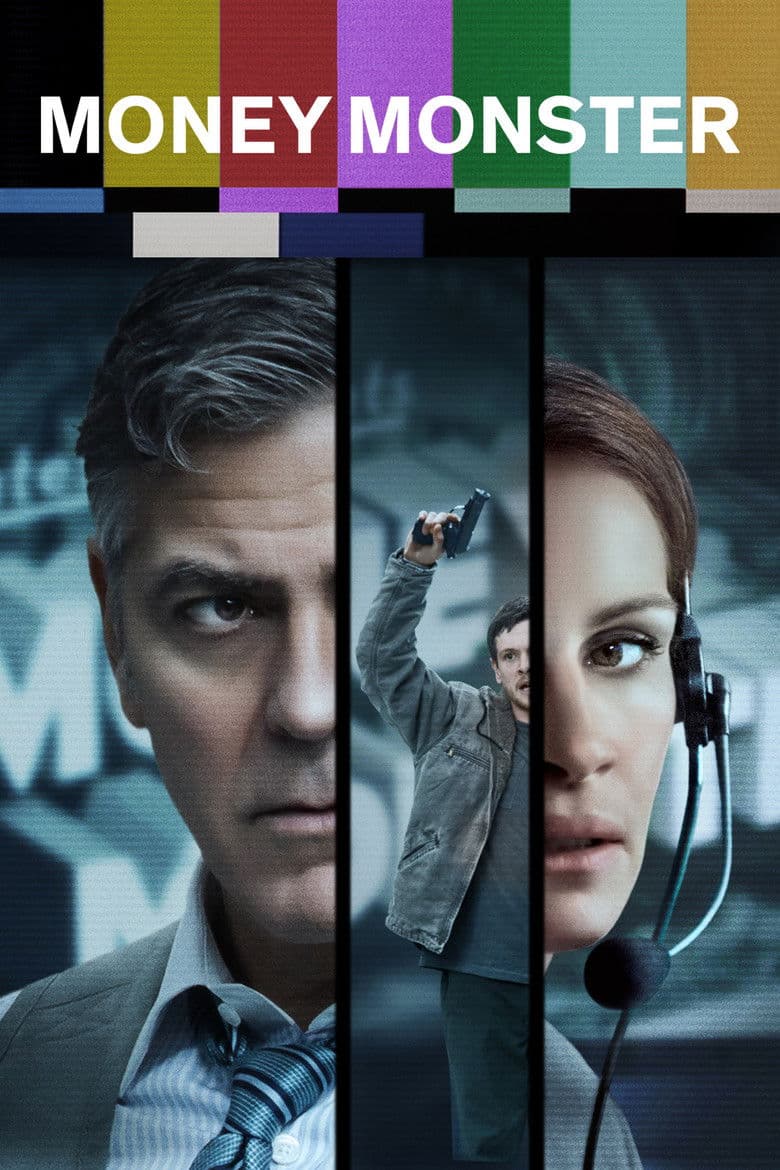
Money Monster is a thriller set on a live financial TV show that gets hijacked. Host Lee Gates and producer Patty Fenn are taken hostage on air by investor Kyle Budwell. Kyle lost his life savings after a stock tip from the show. The crisis becomes a real-time hunt for how IBIS Clear Capital’s algorithm glitch wiped out investors. The story builds toward exposure of CEO Walt Camby’s overseas fraud scheme.
Identity politics stay light on screen. The main identity note is a capable female producer who runs much of the crisis, a role the director expanded on purpose. Dialogue centers on a rigged-feeling market, CEO greed, media spectacle, and a little guy who wants dignity after being wiped out. There is no LGBTQ storyline and no race or gender swap of known characters. Class anger, tech opacity, and cable-news cynicism drive the plot more than modern identity messaging.
Community feedback
Was our 35% Woke rating accurate?
Breakdown
These are the editorial factors and ratings behind our score for Money Monster.
Woke representation / casting
The film uses a modern NYC TV and finance setting with a capable female producer who effectively runs the crisis. Foster intentionally expanded that role. A diverse supporting cast fits the world, including a police captain, a programmer in Seoul, and South African union figures. There is no race or gender swap of a known character and no queer-led casting pitch.
20%
Woke political dialogue
Talk centers on a rigged-feeling market, CEO greed, media spectacle, and a little guy who wants dignity after being wiped out. Foster linked Kyle’s rhetoric to a system-is-rigged mood from that era. Cenk Uygur of The Young Turks cameos as himself. This is soft economic populism and liberal media satire, not slogans about race, gender, or sexuality.
22%
Identity-driven story themes
The spine is a hostage thriller plus a financial fraud reveal about bribing a South African miners’ union for a platinum stock play. Class, opaque tech, and cable-news cynicism drive the plot. A mild secondary thread is Patty as a calm, competent crisis manager. There is no LGBTQ storyline, and the overseas mine plot is corporate crime rather than modern race-activist framing.
12%
Western institutional / cultural critique
The film offers a clear soft-liberal critique of Wall Street wrongdoing, financial TV hype, and one-man corporate greed. Reviews treated it as popcorn populism and soft-liberal satire, not a deep systemic treatise. It is classical anti-corruption and media satire. It does not frame the story around toxic masculinity, patriarchy, whiteness, colonial guilt, or Christian institutions.
32%
Woke character or canon changes
Not relevant. This is an original screenplay, not an adaptation of established characters or historical figures rewritten for identity reasons.
0%
Anti-woke backlash and complaints
There was no meaningful 2016 culture-war campaign treating the film as DEI or identity propaganda. Reception cast it as mixed Hollywood liberalism and a Wall Street popcorn thriller. Later online jokes about it being too woke were scattered. Nothing sustained or mainstream focused on race or gender swaps or a queer agenda.
5%
Creator track record context
Director Jodie Foster is progressive and publicly out as a lesbian, and interviews stressed strong women and an expanded Patty role. Producers George Clooney and Grant Heslov carry a long-running liberal Hollywood brand. Regina K. Scully and Geralyn White Dreyfous add social-justice and women-in-film profiles. Overall this is a progressive liberal creative package, not a queer- or DEI-centered project on screen.
40%
Production

Movie · 2016
When Krisha returns to her estranged family for Thanksgiving dinner, past demons threaten to ruin the festivities.

Movie · 2024
During the 1972 Munich Olympics, an American sports broadcasting crew finds itself thrust into covering the hostage crisis involving Israeli athletes.

Movie · 2017
In 1981, an enthusiastic young adventurer follows his dreams into the Bolivian Amazon jungle with two friends and a guide with a mysterious past.
Movie · 2021
A cold and mysterious new security guard for a Los Angeles cash truck company surprises his co-workers when he unleashes precision skills during a heist.

Movie · 2022
After escaping a Michigan prison, a charming career criminal assumes a new identity in Canada and goes on to rob a record 59 banks and jewellery stores while being hunted by a…

Movie · 2025
Seasoned deep-sea divers battle the raging elements to rescue their crewmate trapped hundreds of feet below the ocean's surface.
Movie · 2019
Los Angeles, 1969. TV star Rick Dalton, a struggling actor specializing in westerns, and stuntman Cliff Booth, his best friend, try to survive in a constantly changing movie…

Movie · 2017
Dr. Steven Murphy is a renowned cardiovascular surgeon who presides over a spotless household with his wife and two children.
