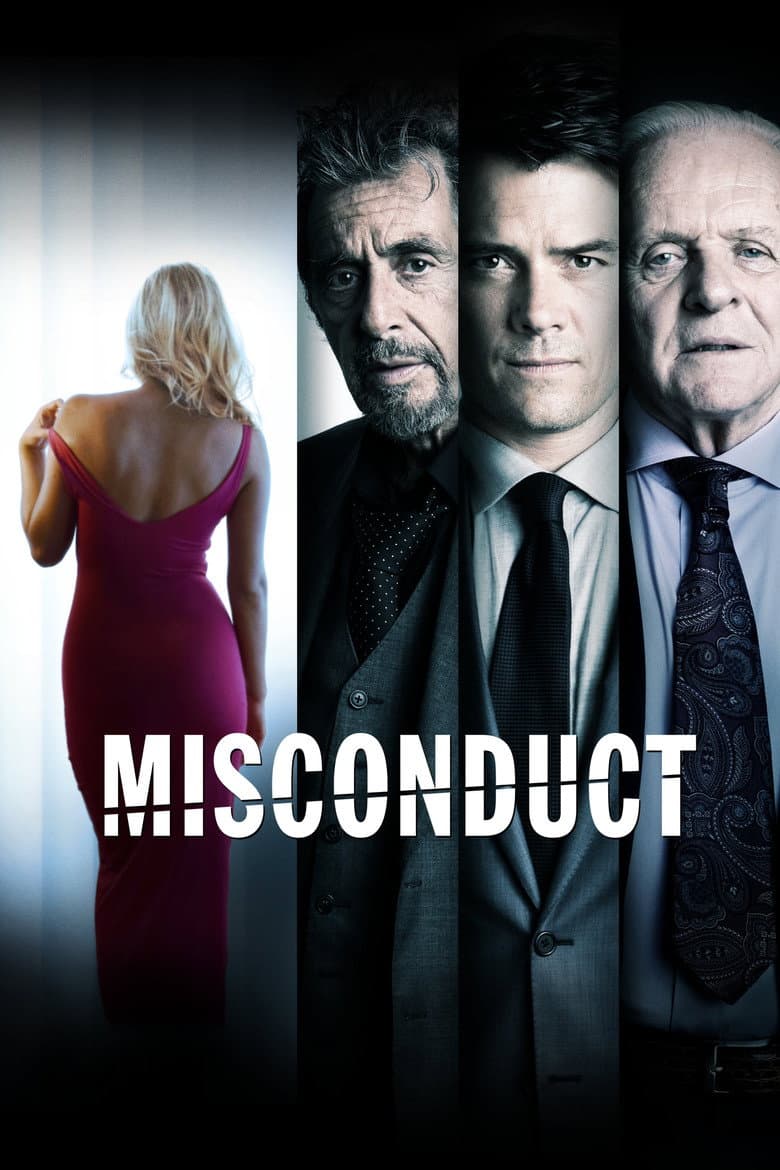
Misconduct is a 2016 legal thriller about an ambitious young lawyer who takes a big case against a corrupt pharmaceutical executive and gets pulled into blackmail, murder, and a web of conspiracy involving his own firm's senior partner. The story follows standard thriller beats of corporate greed, personal ambition, and deadly cover-ups with big-name supporting actors. No identity themes, political lectures, gender-focused arcs, or representation messaging appear in the plot, dialogue, casting, or marketing.
Community feedback
Was our 8% Woke rating accurate?
Breakdown
These are the editorial factors and ratings behind our score for Misconduct.
Woke representation / casting
Standard thriller cast of established actors in fitting roles; one supporting Asian performer plays a logical hitman character with no visible emphasis, signaling, or mismatch to story world.
5%
Woke political dialogue
Occasional lines about pharma greed and ethics stay within classic thriller conflict; no explicit modern activist language, identity framing, or current-events lectures.
5%
Identity-driven story themes
Core story is ambition, betrayal, blackmail, and corporate crime with zero arcs, subplots, or messaging tied to race, gender, sexuality, or identity politics.
0%
Western institutional / cultural critique
Portrays one pharma executive as ruthless and deadly—a familiar thriller trope about unchecked corporate power and cover-ups, presented without modern activist reframing of capitalism, patriarchy, or systemic identity issues.
10%
Woke character or canon changes
Not relevant; fully original story with no adaptations, historical figures, or canon reinterpretations.
0%
Anti-woke backlash and complaints
Total absence of any woke-related backlash, praise, or debate in reviews, social media, or news; all criticism targets only filmmaking quality.
0%
Creator track record context
Key writers, director, and producers have long histories in commercial genre films and VOD thrillers/horror with no documented activist projects, statements, or identity-driven patterns.
5%
Production

Movie · 2022
After escaping a Michigan prison, a charming career criminal assumes a new identity in Canada and goes on to rob a record 59 banks and jewellery stores while being hunted by a…
Movie · 2021
A cold and mysterious new security guard for a Los Angeles cash truck company surprises his co-workers when he unleashes precision skills during a heist.

Movie · 2018
A disgraced children's puppeteer returns to his childhood home and is forced to confront his wicked stepfather and the secrets that have tortured him his entire life.

Movie · 2016
Irish Commandant Pat Quinlan leads a stand off with troops against French and Belgian Mercenaries in the Congo during the early 1960s.

Movie · 2017
A former rodeo star, now a motel manager, meets a young man who is responsible for the violence that suddenly has seized his small town.
Movie · 2019
In 1934, Frank Hamer and Manny Gault, two former Texas Rangers, are commissioned to put an end to the wave of vicious crimes perpetrated by Bonnie Parker and Clyde Barrow, a…

Movie · 2016
When Krisha returns to her estranged family for Thanksgiving dinner, past demons threaten to ruin the festivities.

Movie · 2024
While awaiting the next fuel truck at a middle-of-nowhere Arizona rest stop, a traveling young knife salesman is thrust into a high-stakes hostage situation by the arrival of two…
