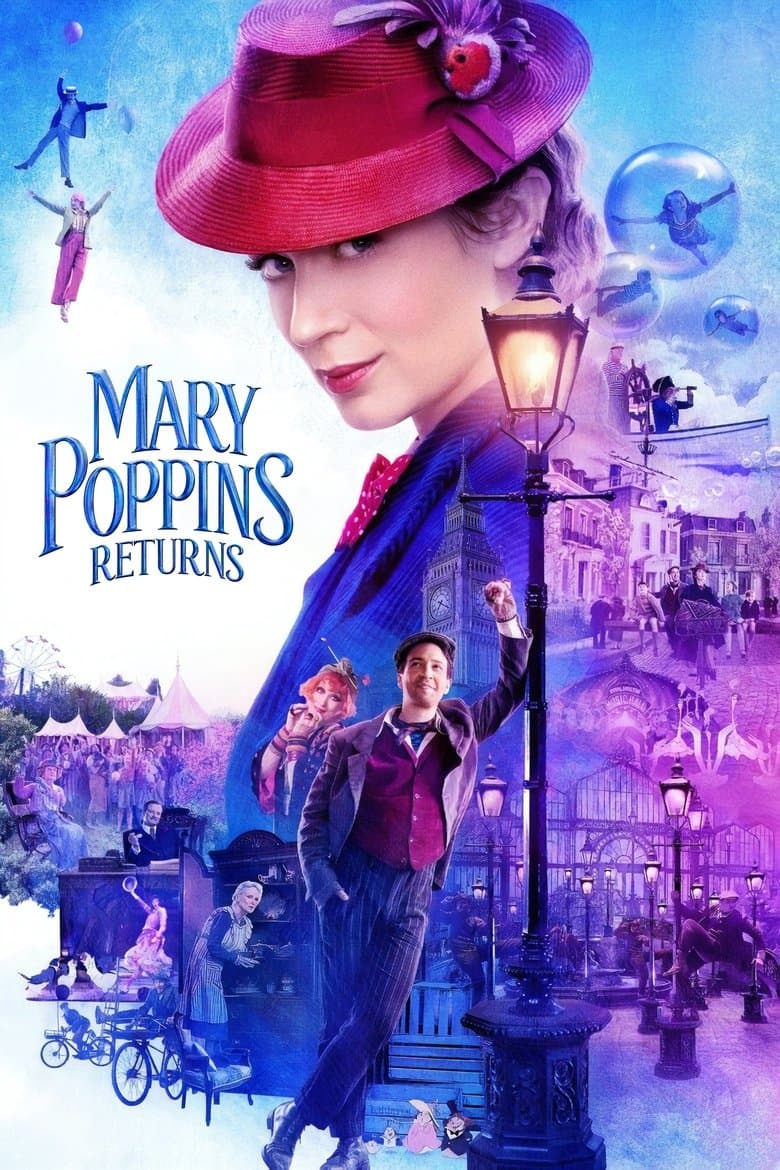
Mary Poppins Returns is a Disney musical sequel set in Depression-era London. Mary Poppins comes back to help the Banks family after the mother has died. The family faces losing their home when a corrupt bank threatens to take it. The film rests on nostalgia, magic, grief, and family healing. Mild class and labor politics from that period also color the story.
The movie does not center modern identity politics about race, gender, or sexuality. Jane Banks works as a union organizer, and foreclosure pressure from a greedy bank drives the main conflict. Supporting London roles use multi-ethnic casting while Mary and the Banks family stay white British period leads. Adult Jane is shown as a pants-wearing labor organizer who chose vocation over romance, but Mary Poppins herself is not race or gender swapped. Viewers mainly get a traditional family musical with light period progressive touches rather than a race or queer centered remake.
Community feedback
Was our 39% Woke rating accurate?
Breakdown
These are the editorial factors and ratings behind our score for Mary Poppins Returns.
Woke representation / casting
Supporting London is filled with modern multi-ethnic faces. Examples include Lin-Manuel Miranda as Cockney lamplighter Jack, black lawyer and secretary roles, South Asian Miss Lark, and diverse leeries. Several critics noted this as a contemporary touch. Mary and the Banks family stay white British and fit the period leads.
30%
Woke political dialogue
Adult Jane Banks works as a union organizer for SPRUCE. The plot turns on a corrupt bank that threatens to repossess the home. The talk stays in Depression-era labor and banking territory. It does not push race, gender, or sexuality identity politics.
20%
Identity-driven story themes
The core story is about grief after a mother’s death, imagination, family healing, and moving upward again. Labor activism and class pressure color the setting. Those elements do not drive race, gender, or queer identity arcs as the main point.
18%
Western institutional / cultural critique
Greedy bank chairman Wilkins and foreclosure pressure attack predatory finance, echoing the original film’s bank satire. Jane’s labor work adds mild progressive color. The film does not frame toxic masculinity, colonial guilt, or anti-Christian ideas, and Michael is a mourning father rather than an ideological punchline.
25%
Woke character or canon changes
Adult Jane is reimagined as a pants-wearing labor organizer who chose work over romance. Jack is a new Bert-like figure with color-conscious casting. Mary Poppins herself is not race or gender swapped. The Banks bloodline stays continuous with the 1964 film.
12%
Anti-woke backlash and complaints
National Review objected to a socialist and labor undercurrent. Scattered “woke” digs appeared on social media. There was no large sustained anti-woke campaign. Many family and Christian viewers praised the film for not pushing a modern political agenda.
15%
Creator track record context
Director and co-writer Rob Marshall is an openly gay filmmaker who has linked storytelling to social progress. Casting leadership includes Bernard Telsey’s strongly DEI-aligned office and middling industry casting profiles. Writers Magee and DeLuca and the Travers source material are low-activist. Overall context is moderate rather than activist-dominant.
40%
Production
Movie · 2016
A stuffy businessman finds himself trapped inside the body of his family's cat.
Movie · 2018
Siblings Kate and Teddy try to prove Santa Claus is real, but when they accidentally cause his sleigh to crash, they have to save Christmas.
Movie · 2018
Be careful what you wish for. With their after school junk business, best friends Sonny and Sam hope to find treasure in other people’s trash.
Movie · 2024
After discovering she can see everyone's imaginary friends, a girl embarks on a magical adventure to reconnect forgotten imaginary friends with their kids.

Movie · 2021
In suburban Chicago during the late 1980s, ten-year-old Jake Doyle embarks on a herculean quest to get the latest and greatest video game system for Christmas.
Movie · 2024
Inside of his book, adventurous Harold can make anything come to life simply by drawing it. After he grows up and draws himself off the book's pages and into the physical world…
Movie · 2018
The Grinch hatches a scheme to ruin Christmas when the residents of Whoville plan their annual holiday celebration.
Movie · 2020
After losing his wife seven years earlier, the eccentric Dr. John Dolittle, famed doctor and veterinarian of Queen Victoria’s England, hermits himself away behind the high walls…
