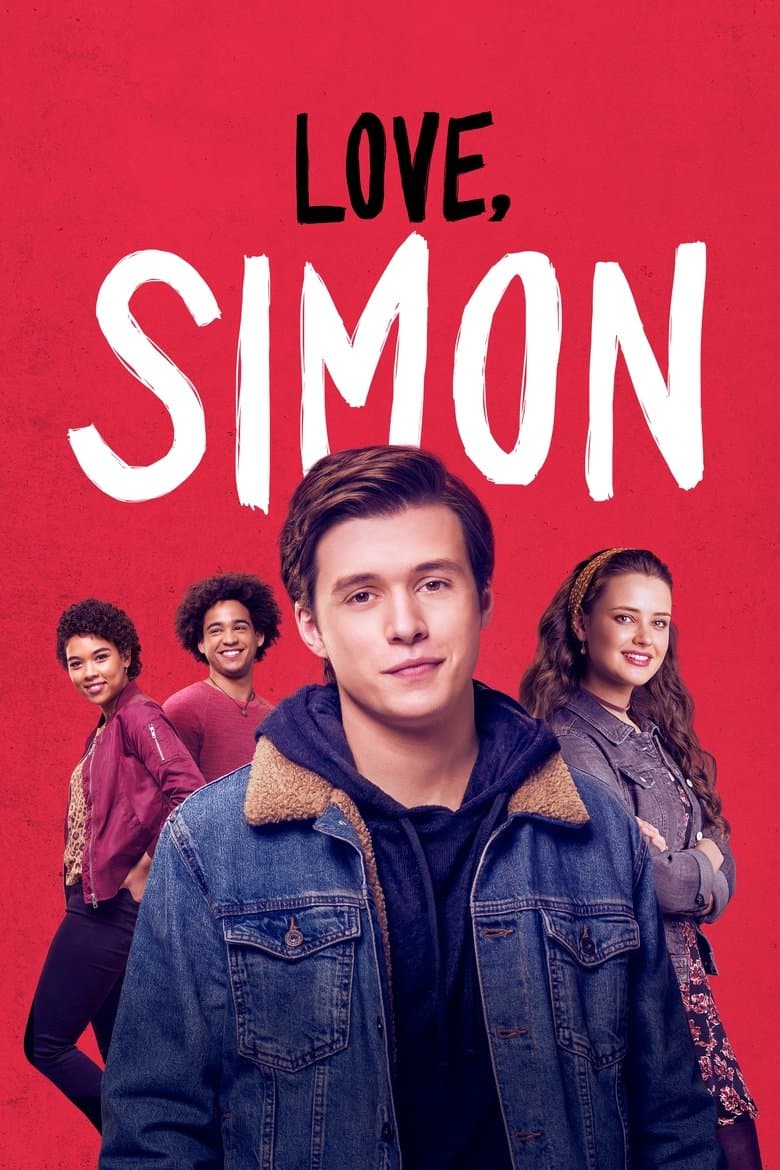
Love, Simon follows Simon Spier, a 17-year-old student in a comfortable Atlanta suburb. Simon has a loving family, close friends, and an ordinary school life, but he keeps his sexuality secret. He falls for a boy called Blue through private emails while trying to hide from classmates. When another student finds the emails and threatens to expose him, Simon must face fear, guilt, and the damage he causes to his friends. The film uses jokes, school drama, romance, and a warm tone while still showing the pain of having a private secret shared.
The film makes gay identity the center of its story rather than a side detail. Simon's secret, his romance with Blue, and his decision to come out shape nearly every major scene. The story says that gay teens deserve love and should control when and how they tell others. Simon's family and school mostly respond with care, so the film presents acceptance as the right answer and ends with a public romance between two boys. The main woke element is therefore a strong, direct queer message, while broader political ideas stay light.
Community feedback
Was our 79% Woke rating accurate?
Breakdown
These are the editorial factors and ratings behind our score for Love, Simon.
Woke representation / casting
Simon is a gay lead, and Bram is the boy he loves. Ethan is another openly gay student whose own coming-out experience is shown. The film therefore puts queer identity in several important teen roles. Abby and Nick form an interracial couple, but the film does not make race or gender a political talking point.
40%
Woke political dialogue
Simon asks why straight identity is treated as the default. He says it is unfair that only gay people have to come out. His final school message says that he deserves a great love story and should be free to be himself. The film presents these ideas in personal talks and jokes, not in long policy speeches.
28%
Identity-driven story themes
Simon's secret gay identity drives the romance, blackmail, friendship fights, and ending. His emails with Blue give the film its main love story. His public outing and later choice to come out make acceptance and self-acceptance the main message. The Ferris wheel ending treats two boys in love as a normal happy couple.
94%
Western institutional / cultural critique
Simon questions why straight identity is treated as normal while gay people must explain themselves. The school stops bullying and the adults support Simon after he is outed. The film shows a mild challenge to a social norm, but it does not attack family, faith, or Western institutions.
15%
Woke character or canon changes
Not present in this title.
0%
Anti-woke backlash and complaints
Some conservative Christian review sites called the film a pro-homosexual agenda. They objected to the film's message that gay romance deserves acceptance. Mainstream coverage did not show a large boycott or organized anti-woke campaign. The backlash was limited beside the film's mostly positive public reception.
18%
Creator track record context
Greg Berlanti has a strong record of LGBTQ+ stories and advocacy, and the film's key family scene draws on his own coming-out experience. Becky Albertalli's YA work often centers LGBTQ+ teens and acceptance. Elizabeth Berger and Isaac Aptaker are known mainly for character and family stories, with no similar public activist record. The creator background strongly matches the film's central identity theme.
62%
Production

Movie · 2016
From Jane Austen’s novella, the beautiful and cunning Lady Susan Vernon visits the estate of her in-laws to wait out colorful rumors of her dalliances and to find husbands for…

Movie · 2023
The dramatic comedy is based on the true story of writer and pinball wizard Roger Sharpe, chronicling his journey to overturn New York City’s 35-year ban on pinball.

Movie · 2016
Maggie's plan to have a baby on her own with a sperm donor is derailed when she falls in love with John, an older married professor, destroying his volatile marriage to the…
Movie · 2024
Fran likes to think about dying. It brings sensation to her quiet life. When she makes the new guy at work laugh, it leads to more: a date, a slice of pie, a conversation, a…

Movie · 2019
Charlie suffers from a serious disease that causes acute narcolepsy whenever he is happy. Although he develops a variety of techniques to deny himself pleasure and deal with his…

Movie · 2016
A week in the life of Paterson, a poet bus driver, and his wife Laura, a very creative artist, who live in Paterson, New Jersey, hometown of many famous poets and artists.

Movie · 2022
Divorced couple Georgia and David find themselves on a shared mission: they team up and travel to Bali to stop their daughter Lily from making the same mistake they once made 25…
Movie · 2016
A boy growing up in Dublin during the 1980s escapes his strained family life by starting a band to impress the mysterious girl he likes.
