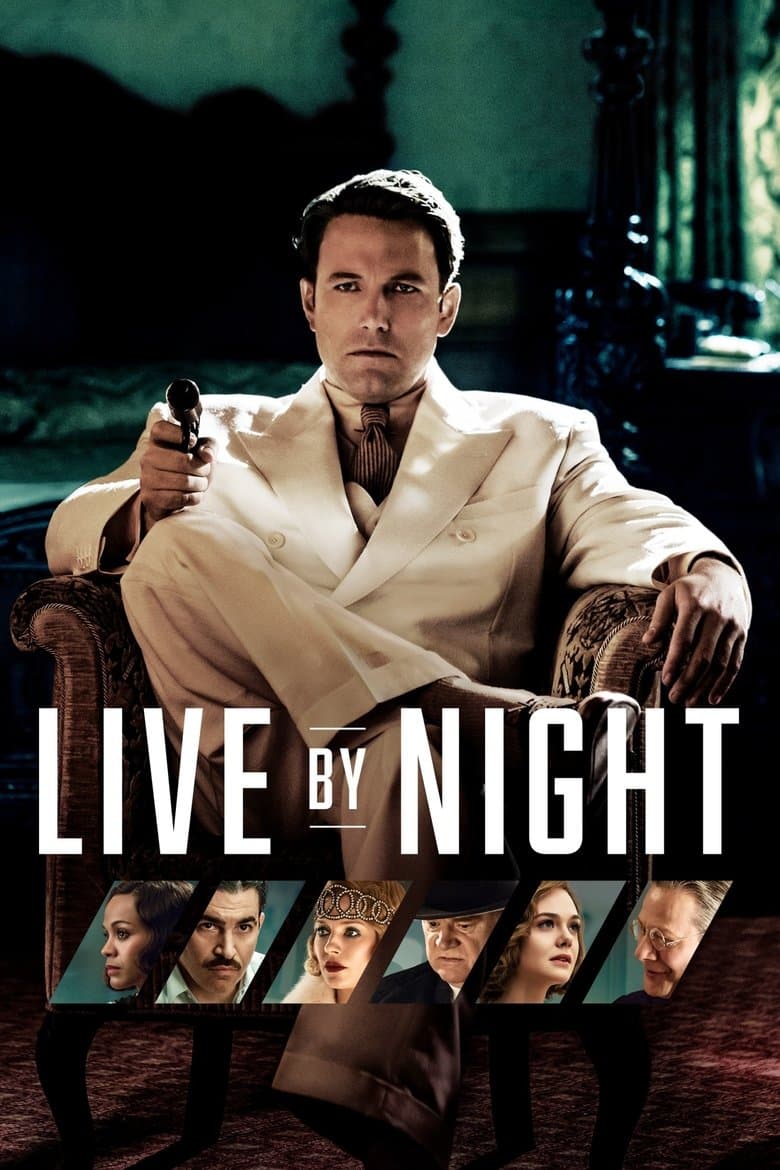
Joe Coughlin starts as a Boston outlaw and grows into a Florida rum boss during Prohibition. He runs a crime business, deals with the mob, and faces a corrupt sheriff. He also fights the Klan because of his Cuban partner and his ties to immigrant workers. A revivalist daughter’s crusade against gambling later wrecks a big casino plan. The story stays a classic gangster rise-and-fall tale with love, revenge, and dirty local power.
The most visible modern-leaning parts are his central romance with Cuban partner Graciela and a Florida stretch built around race, immigration, and Klan attacks. The script also gives a clear speech about immigrants building the country. There is one short blackmail scene about a police chief’s affair with a man. Evangelical anti-gambling pressure shows up as an obstacle, not as the main point of the movie. These pieces matter inside the plot, but they sit inside ordinary crime-drama conflict rather than taking over the whole film.
Community feedback
Was our 42% Woke rating accurate?
Breakdown
These are the editorial factors and ratings behind our score for Live by Night.
Woke representation / casting
The main love story pairs Irish-American Joe with Cuban partner Graciela, and that couple draws Klan violence. The wider cast stays a normal period crime group of Irish and Italian mob figures and Southern cops. The interracial romance and Saldana’s big romantic role are easy to see. One short blackmail scene involves a police chief’s affair with a man.
22%
Woke political dialogue
The script has a clear speech about immigrants building the country. Several reviews called it preachy and aimed at modern ears. Affleck said a story about immigrants, the Klan, and morality felt current after the 2016 election. Racist talk from Klansmen is villain speech, not constant lecture talk through the whole film.
34%
Identity-driven story themes
The core story is still gangster ambition and revenge. A full Florida section is built around race, immigration, and the Klan going after Joe for non-white business and his bond with Graciela. Multicultural Ybor against white-supremacist violence is hard to miss. The same-sex blackmail beat is brief and serves the plot rather than a full queer arc.
40%
Western institutional / cultural critique
Corrupt cops and mob hypocrisy are standard crime-story tools here. Stronger modern-adjacent notes include a clear moral fight against the Klan and Loretta’s evangelical anti-gambling crusade. She admits she does not believe, then kills herself, which undercuts sincere faith and treats revival pressure as a block to progress. This is not a long attack on the church or the West as a whole system.
24%
Woke character or canon changes
Not relevant. Graciela as Cuban partner, the Klan conflict, and the Florida rum wars follow the Lehane novel. Film changes look like normal shortening, not identity-driven rewrites of history or canon figures.
0%
Anti-woke backlash and complaints
There was no real right-leaning campaign calling the film too woke or DEI propaganda. Talk focused on style over substance and the flop. A few critics joked that Joe was a woke gangster who speechifies about immigrants and fights the Klan. That is light review snark, not broad audience backlash.
8%
Creator track record context
Affleck as writer, director, and star is the main creative force, with moderate progressive and industry signals and some later pushback on Hollywood excess. Lehane writes race and class with a realist edge. DiCaprio is known more for climate activism than for this film’s identity politics. Other listed craft names are not the public face of the movie.
30%
Production
Movie · 2016
As a math savant uncooks the books for a new client, the Treasury Department closes in on his activities and the body count starts to rise.
Movie · 2024
While struggling with his dual identity, Arthur Fleck not only stumbles upon true love, but also finds the music that's always been inside him.
Movie · 2017
The story of the kidnapping of 16-year-old John Paul Getty III and the desperate attempt by his devoted mother to convince his billionaire grandfather Jean Paul Getty to pay the…
Movie · 2021
The seemingly casual reunion of three old friends at an out-of-the-way repair shop masks a hidden agenda fuelled by the arrival of a privileged young yuppie.
Movie · 2021
When the aging Meyer Lansky is investigated one last time by the Feds who suspect he has stashed away millions of dollars over half a century, the retired gangster spins a…
Movie · 2016
In the fourth installment of the fighting franchise, Boyka is shooting for the big leagues when an accidental death in the ring makes him question everything he stands for.
Movie · 2018
John Gotti rises to the top of the New York underworld to become the boss of the Gambino crime family. His life takes a tumultuous turn as he faces tragedy, multiple trials and a…
Movie · 2024
Roy Freeman, an ex-homicide detective with a fractured memory, is forced to revisit a case he can't remember.
