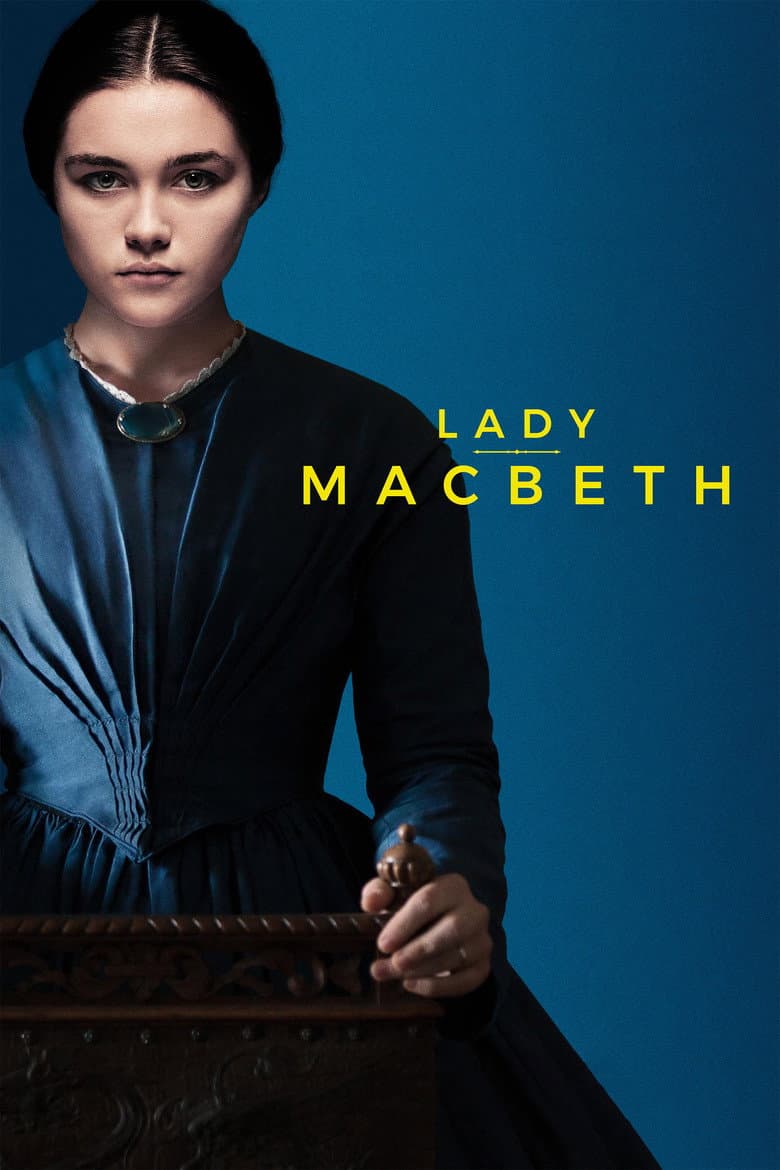
Lady Macbeth is a 2016 British period drama set in rural England in 1865. It follows Katherine, a young woman trapped in a loveless marriage to an older man and controlled by his father, who begins an affair with a farmhand and turns to murder to seize control of the estate and her life.
The story centers on her sexual awakening and ruthless fight for personal freedom against male authority and class rules. Casting places black actors in key roles as the lover and maid, creating visible interracial dynamics and power imbalances that critics have linked to the film's themes of gender, race, and oppression.
Community feedback
Was our 52% Woke rating accurate?
Breakdown
These are the editorial factors and ratings behind our score for Lady Macbeth.
Woke representation / casting
Black and mixed-race actors fill prominent supporting roles (maid, lover, child, grandmother) in a 1865 rural English setting through colorblind auditions; the choices were publicly discussed by the team and critics as adding racial and class layers to the gender story, making them audience-visible.
42%
Woke political dialogue
The film uses silence, glances, and violent actions instead of spoken political arguments or modern activist language.
8%
Identity-driven story themes
The core arc follows a woman’s sexual liberation and violent rebellion against patriarchal marriage and inheritance control, with race intersecting through the affair and servant relationships; many reviewers read it as feminist and intersectional.
38%
Western institutional / cultural critique
It portrays Victorian marriage, paternal authority, and class systems as stifling and cruel, showing male sexual failure and domination alongside exploitation of servants; the critique stays within the period story without modern activist slogans.
32%
Woke character or canon changes
The story relocates a Russian novella to England and assigns visible racial identities to characters not specified that way in the source, shifting the cultural context and adding diversity to a setting usually shown as uniformly white.
22%
Anti-woke backlash and complaints
The film received acclaim for boldness and performances with some progressive debate over white female agency versus true intersectionality; virtually no broad audience or media accusations of propaganda or forced wokeness.
12%
Creator track record context
Writer Alice Birch has a clear history of radical feminist plays focused on women’s oppression and revolt; director William Oldroyd favors nuanced female stories; casting director Shaheen Baig actively promotes diverse casting.
48%
Production
Movie · 2016
WWII American Army Medic Desmond T. Doss, who served during the Battle of Okinawa, refuses to kill people and becomes the first Conscientious Objector in American history to…
Movie · 2023
The story of J. Robert Oppenheimer's role in the development of the atomic bomb during World War II.
Movie · 2024
On the brink of the Second World War, a young Norwegian man's drive to resist the Nazis sets a new course for his future – and the future of his country.
Movie · 2025
Diagnosed with Tourette Syndrome at 15, John Davidson navigates his way against the odds through troubled teenage years and into adulthood, finding inspiration in the kindness of…
Movie · 2023
The true story of the inseparable Von Erich brothers, who made history in the intensely competitive world of professional wrestling in the early 1980s.
Movie · 2016
After his older brother passes away, Lee Chandler is forced to return home to care for his 16-year-old nephew.
Movie · 2016
On 15 January 2009, the world witnessed the 'Miracle on the Hudson' when Captain 'Sully' Sullenberger glided his disabled plane onto the Hudson River, saving the lives of all 155…
Movie · 2026
While people across 1990s Iraq struggle to survive the war and food shortages, Saddam Hussein requires each school in the country to prepare a cake to celebrate his birthday.
