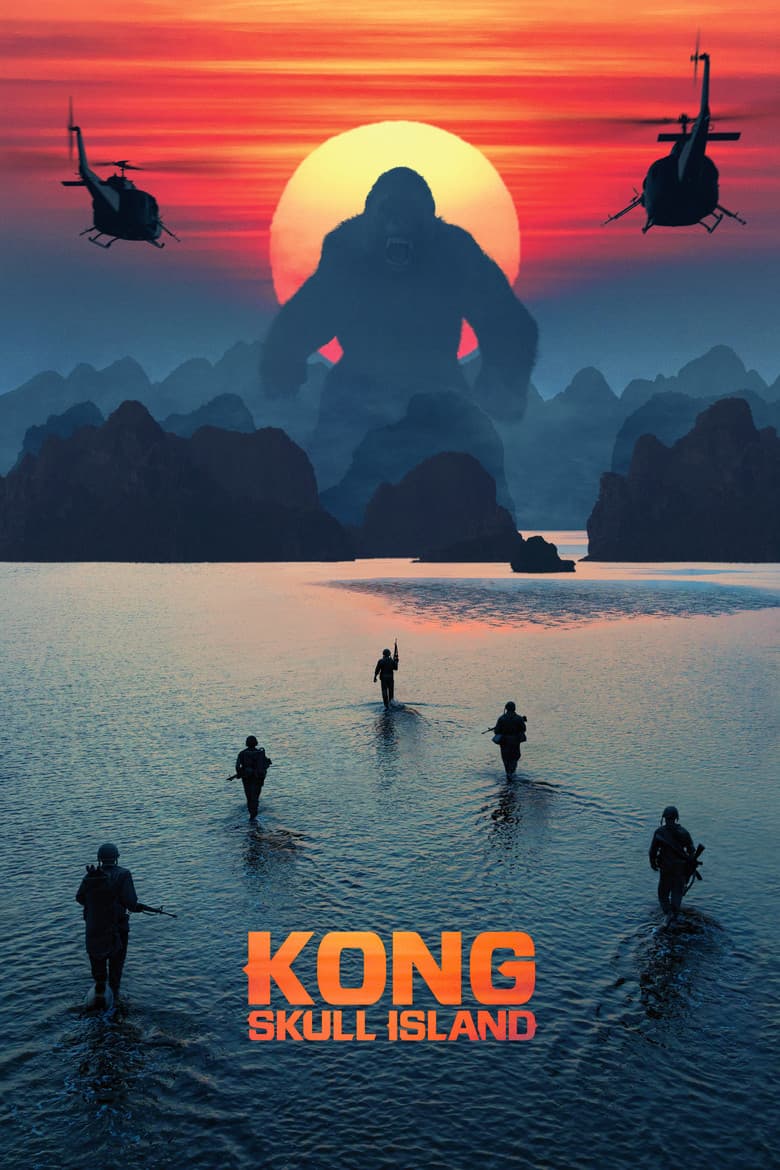
Kong: Skull Island is an action-packed monster movie set in 1973 at the end of the Vietnam War. A secret government team hires a British tracker, James Conrad, and a military helicopter squad to explore an uncharted Pacific island. They also bring along Mason Weaver, a tough female photojournalist who opposes the war. Upon arrival, their seismic bombing run provokes Kong, a giant ape who destroys their helicopters. The survivors must cross a dangerous jungle filled with deadly monsters to reach their rescue point. The story carries noticeable political themes focused on anti-war and environmentalist messages. The military leader, Colonel Packard, acts as a crazed villain obsessed with winning a war against nature, which critiques American military intervention. Weaver constantly champions a peaceful approach and wants to protect the giant ape. Viewers will easily notice these heavy anti-imperialist ideas and environmental lectures.
Community feedback
Was our 36% Woke rating accurate?
Breakdown
These are the editorial factors and ratings behind our score for Kong: Skull Island.
Woke representation / casting
The movie features a diverse ensemble cast, including several prominent actors of color and a capable female co-lead in Brie Larson. The casting mostly aligns with a realistic 1970s military and research expedition, though the inclusion of Chinese actress Jing Tian was widely viewed as a business-driven move to appeal to international markets rather than a modern activist diversity effort. Brie Larson's character is competent but remains within believable physical limits for the story setting.
20%
Woke political dialogue
Dialogue is occasionally political, relying on standard anti-war and anti-interventionist themes typical of Vietnam War films. Brie Larson's character explicitly corrects others by calling herself an "anti-war photographer." Characters deliver lines criticizing military aggression and the human drive to conquer what they do not understand, but there is no modern activist or identity-focused preaching in the script.
15%
Identity-driven story themes
The narrative does not focus on modern identity politics, gender struggles, or racial identity. The main conflict revolves around survival, monster action, and the classic clash between military hubris and the natural world.
0%
Western institutional / cultural critique
The film presents a noticeable critique of Western military intervention and imperialism. The United States military is represented by a fanatical, unhinged commander who cannot accept the end of the Vietnam War and seeks a false victory by destroying a natural protector. While this anti-war and anti-conquest messaging is a standard trope of 1970s war cinema, some viewers will find the critique of Western authority and technological aggression hard to miss.
38%
Woke character or canon changes
The film significantly alters the classic King Kong lore to align with modern sensibilities. The native Iwi tribe, historically depicted as hostile savages who sacrifice women, are reimagined as a peaceful, silent community living in perfect harmony with nature and Kong. Additionally, the traditional story of capturing Kong for Western exploitation in New York is replaced with a narrative about leaving him alone to protect his habitat, reflecting modern environmentalist and anti-colonial ideas.
25%
Anti-woke backlash and complaints
There was no significant anti-woke backlash or organized campaigns against the movie during its release. Years later, some conservative commentators criticized Brie Larson's retrospective comments where she claimed her role was a form of political activism, but this did not result in major public controversy or impact the film's general reception as a fun monster blockbuster.
4%
Creator track record context
The key creative team has a mixed track record. Director Jordan Vogt-Roberts holds progressive political views and has partnered with diversity-focused production groups. Casting director Sarah Halley Finn and script supervisor Dawn Gilliam have strong ties to industry diversity and inclusion initiatives. However, the large writing and production teams consist primarily of traditional blockbuster creators with no activist or political histories.
23%
Production
Movie · 2020
A portal transports Cpt. Artemis and an elite unit of soldiers to a strange world where powerful monsters rule with deadly ferocity.
Movie · 2021
Washed-up MMA fighter Cole Young, unaware of his heritage, and hunted by Emperor Shang Tsung's best warrior, Sub-Zero, seeks out and trains with Earth's greatest champions as he…
Movie · 2016
A common thief joins a mythical god on a quest through Egypt.
Movie · 2017
Four teenagers in detention discover an old video game console with a game they’ve never heard of. When they decide to play, they are immediately sucked into the jungle world of…
Movie · 2022
Prince Amleth is on the verge of becoming a man when his father is brutally murdered by his uncle, who kidnaps the boy's mother.
Movie · 2016
From DC Comics comes the Suicide Squad, an antihero team of incarcerated supervillains who act as deniable assets for the United States government, undertaking high-risk black ops…
Movie · 2021
Determined to ensure Superman's ultimate sacrifice was not in vain, Bruce Wayne aligns forces with Diana Prince with plans to recruit a team of metahumans to protect the world…

Movie · 2022
A new adventure begins for Luffy and his crew when mysterious pop superstar Uta unveils her identity — and launches a misguided plan for world peace.
