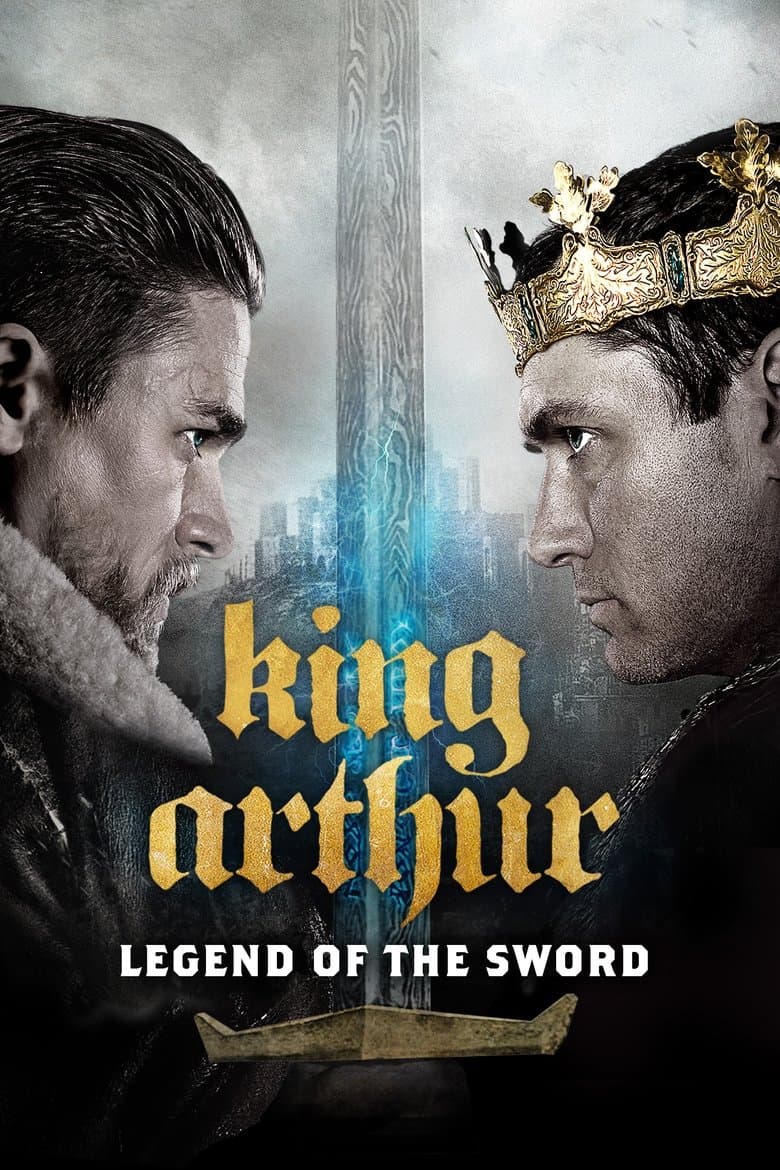
Movie review
After his uncle Vortigern murders his parents and seizes the crown, Arthur grows up as a street hustler in Londinium’s brothels and back alleys. When he draws Excalibur from the stone, a resistance led by Sir Bedivere and a mysterious female Mage force him to accept his birthright and topple the tyrant. Guy Ritchie’s take is a knowingly anachronistic gangster-style origin story rather than a faithful medieval epic. The core plot follows a male hero’s journey of trauma, sword mastery, and defeating a usurping uncle, with the Round Table setup at the end.
Audience-visible progressive elements stay modest. Support roles include diverse casting such as Djimon Hounsou as Sir Bedivere, Tom Wu as Kung Fu George, and Kingsley Ben-Adir as Wet Stick, while the leads stay white. The Mage is a capable female mystic ally rather than a romance plot, after Guinevere was reworked in production. Dialogue sticks to street banter and anti-tyrant talk, not modern identity politics. The film is classic tyranny and class-caper myth, not a broad attack on Western institutions.
Community feedback
Was our 31% Woke rating accurate?
Breakdown
These are the editorial factors and ratings behind our score for King Arthur: Legend of the Sword.
Woke representation / casting
The film puts diverse actors in big support roles in a legendary British story. Bedivere, Kung Fu George, and Wet Stick stand out. The leads stay white. The mix is deliberate modern casting rather than a full lead race swap.
34%
Woke political dialogue
Talk stays on street banter, destiny, and fighting a tyrant. There are no real speeches about race, gender equity, or systemic oppression. The cockney swagger is Ritchie style, not activist scripting.
0%
Identity-driven story themes
The main story is a male hero’s path from orphan to king. The Mage is a strong female ally who helps Arthur. Gender, race, or queer politics are not the spine of the plot that audiences see.
12%
Western institutional / cultural critique
The fight is classic tyranny and street smarts against a corrupt king. The film is anti-tyrant fantasy and class myth, not a modern attack on whiteness, patriarchy, or Christianity. Faith is mostly stripped out, not attacked.
5%
Woke character or canon changes
Guinevere became the Mage, a freestanding mystic rather than a romance plot. Established knight roles use non-European actors, and Kung Fu George is an invented anachronistic knight. Ordinary Ritchie modernization is not the scored part.
22%
Anti-woke backlash and complaints
The film was not a big culture-war fight. Failure was mostly reviews and box office. Some anti-PC notes exist, like a National Catholic Register piece and scattered social posts, but the volume is modest.
18%
Creator track record context
Ritchie and the writers do not show a strong pattern of activist or identity-first work on this project. Ritchie talks about myth, craft, and ego themes, not representation politics.
9%
Production
Movie · 2024
In the year 2898 AD, around 6000 years after Kurukshetra war, Ashwatthama gears up for his final battle of redemption at the sign of hope in a dystopian world and Bhairava, a…
Movie · 2019
A boy is given the ability to become an adult superhero in times of need with a single magic word.
Movie · 2019
In the wake of The Death of Superman, the world is still mourning the loss of the Man of Steel following his fatal battle with the monster Doomsday.

Movie · 2025
In this extraordinary story of an ordinary man, Charles 'Chuck' Krantz experiences the wonder of love, the heartbreak of loss, and the multitudes contained in all of us.
Movie · 2025
The Demon Slayer Corps are drawn into the Infinity Castle, where Tanjiro, Nezuko, and the Hashira face terrifying Upper Rank demons in a desperate fight as the final battle…

Movie · 2017
A supernatural love story that centers on two parents whose life together falls apart after their son dies. The man, now a successful lawyer, and the woman, now married and an…

Movie · 2022
Known as America’s Poet, Henry Wadsworth Longfellow leads an idyllic life – until the day his world is shattered by tragedy.
Movie · 2021
Yuta Okkotsu is a nervous high school student who is suffering from a serious problem—his childhood friend Rika has turned into a curse and won't leave him alone.
