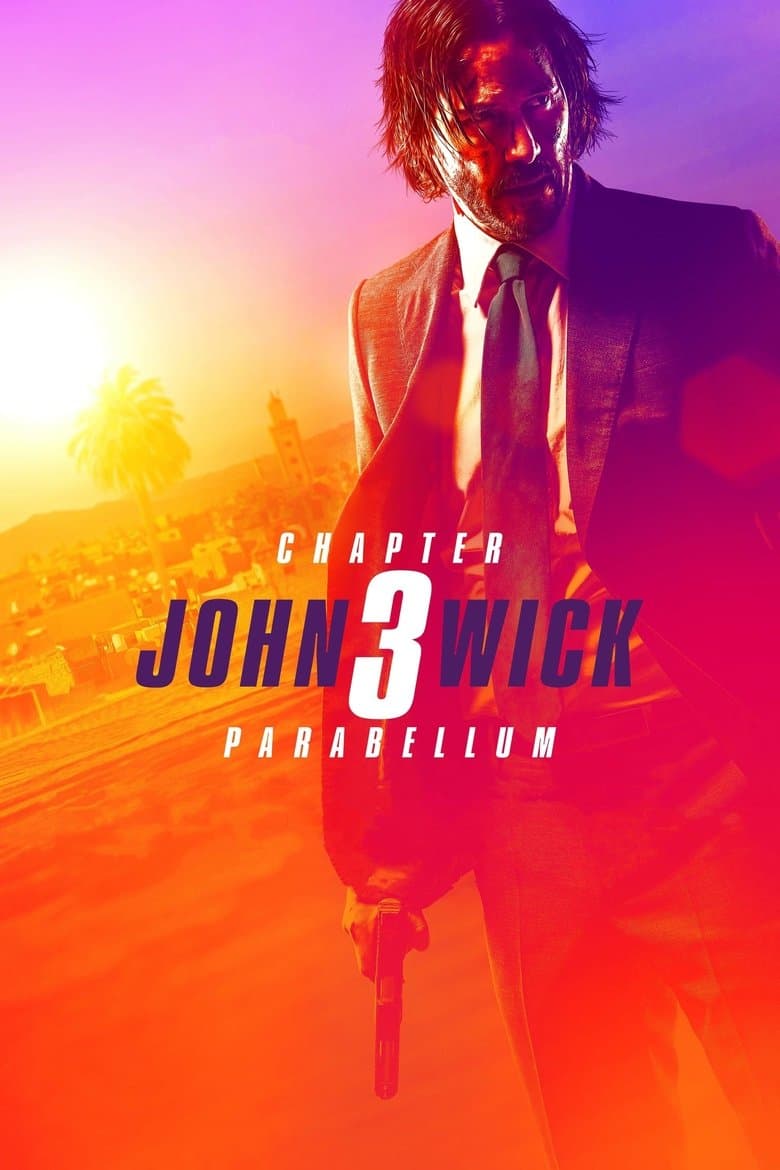
John Wick is an excommunicated assassin on the run after a huge High Table bounty is placed on him. He calls in old favors and markers, including help from Sofia and the Ruska Roma. He seeks the Elder who sits above the High Table, then returns for a brutal siege at the Continental against the Adjudicator’s enforcers. The story is about honor, debt, loyalty, and survival under strict assassin rules. His fight is also tied to protecting the memory of his late wife.
The most visible audience-facing element is Asia Kate Dillon as the High Table’s Adjudicator, a non-binary character treated as intentional gender diversity in casting and press. On screen that identity is not named in dialogue, so many viewers may only learn it from casting knowledge or promo. Halle Berry plays Sofia, a skilled black female assassin and Continental manager, which fits this franchise’s multi-ethnic underworld more than a pure message role. The core plot is still exile, debt, and war with a crime hierarchy, not an identity politics story. There is no activist dialogue or critique of Western institutions.
Community feedback
Was our 30% Woke rating accurate?
Breakdown
These are the editorial factors and ratings behind our score for John Wick: Chapter 3 - Parabellum.
Woke representation / casting
Asia Kate Dillon is cast as the High Table’s Adjudicator as a non-binary character, and production and LGBTQ press treat that as intentional gender diversity in a major antagonist role. Halle Berry’s Sofia is a highly competent black female assassin and Continental manager in a large set piece. That fits the franchise’s multi-ethnic underworld and earlier capable women more than pure girlboss engineering, but together with the Adjudicator it forms a noticeable representation pattern. Other multicultural hitmen otherwise read as setting-typical rather than a forced one-of-each cast.
44%
Woke political dialogue
Not present. Dialogue stays on markers, High Table law, bounties, desert penance, and gun-fu logistics with no activist or modern identity talking points.
0%
Identity-driven story themes
The core arc is exile, debt, honor, and war with a crime hierarchy so John can keep loving his dead wife’s memory. That is not systemic identity messaging. The confirmed non-binary Adjudicator matters to some audiences through casting and promo but is not a plot about queer identity or activism. It is an incidental LGBTQ element, not a queer-centered story.
16%
Western institutional / cultural critique
Not present. The enemies are the fictional High Table and Continental bureaucracy, not a modern activist attack on Western culture or institutions.
0%
Woke character or canon changes
Not relevant. because these are original franchise characters, and the Adjudicator is a new role rather than an identity rewrite of an established Wick character.
0%
Anti-woke backlash and complaints
There was no major news-cycle campaign calling the film too woke. Some niche online grumbling about Dillon’s performance or casting exists. Framing the movie as a full agenda film under anti-DEI terms is thin. Overall reception stayed focused on action craft and box office, not boycotts.
8%
Creator track record context
Core Wick creatives score low on social-justice filmmaking patterns in cached track records. Stahelski, the writers, and most producers sit in a low range, with casting director Mary Vernieu a mild outlier for representation talk. Identity framing here mainly comes from the Adjudicator casting decision. It is not a creator activist brand for the series.
12%
Production
Movie · 2017
John Wick is forced out of retirement by a former associate looking to seize control of a shadowy international assassins’ guild.
Movie · 2018
Agent Matt Graver teams up with operative Alejandro Gillick to prevent Mexican drug cartels from smuggling terrorists across the United States border.

Movie · 2024
A contract killer, after being diagnosed with a fast-moving form of dementia, is presented with the opportunity to redeem himself by saving the life of his estranged adult son.

Movie · 2025
Newly released from prison and marked for death by unrelenting enemies, Nate must now protect his estranged 9-year-old daughter, Polly, at all costs.
Movie · 2026
A man living in self-imposed exile on a remote island rescues a young girl from a violent storm, setting off a chain of events that forces him out of seclusion to protect her from…
Movie · 2023
Ex-con Russell Gaines is attempting to rebuild his life with the help of his father, Mitchell. However, the arrival of Maben sends his new life into chaos, leading the pair to go…
Movie · 2020
A reformed hunter becomes involved in a deadly game of cat and mouse when he and the local sheriff set out to track a vicious killer who may have kidnapped his daughter years ago.
Movie · 2023
Back from the brink of death, highly skilled commando Tyler Rake takes on another dangerous mission: saving the imprisoned family of a ruthless gangster.
