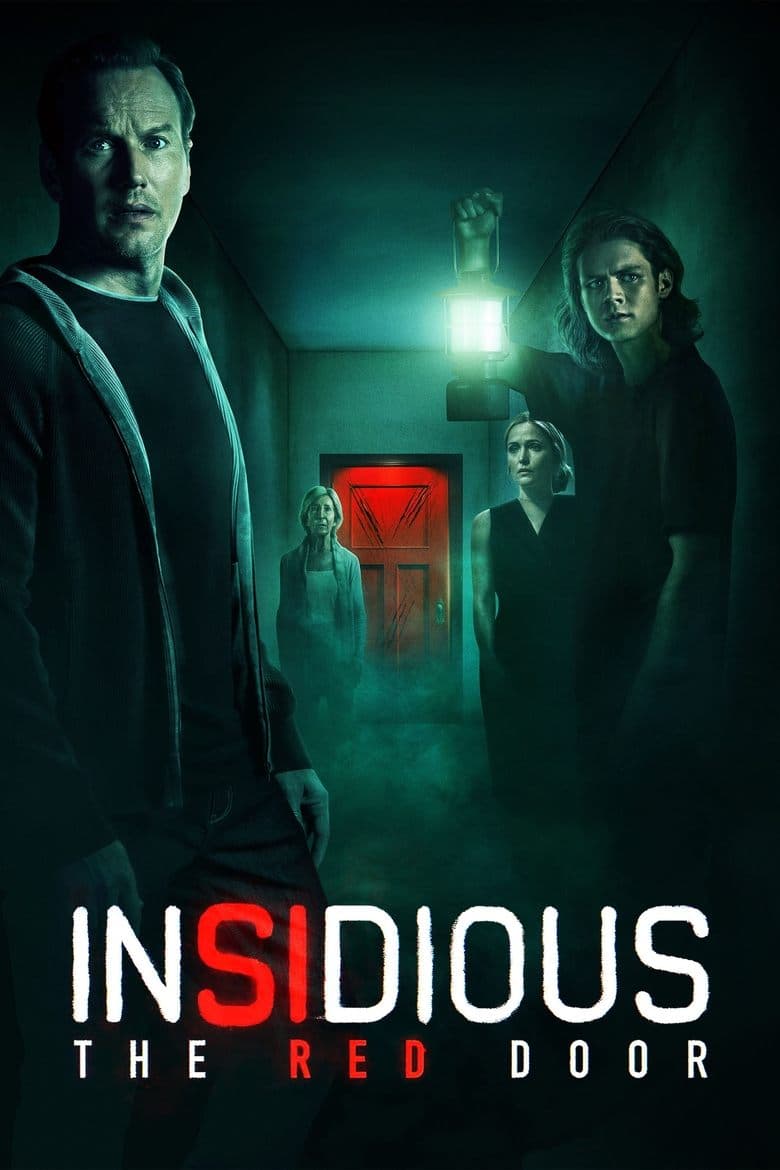
Josh Lambert is grieving his mother while living apart from his wife and struggling to reach his children. His son Dalton leaves for college, but old memories return after an art lesson opens a path to The Further, the dark spirit world from the earlier films. Father and son must face the demons that followed them since Dalton was a child. The movie uses jump scares, family conflict, and a serious but familiar horror tone.
Dalton meets Chris, a black female student, and Professor Armagan, played by Palestinian actress Hiam Abbass, during his first days at school. Chris helps him explore the strange events, while Armagan’s class brings back his buried memories. The story gives both women supporting roles, while its main message follows Josh and Dalton as they face painful memories. Their final choice turns family guilt into forgiveness and a chance to heal.
Community feedback
Was our 10% Woke rating accurate?
Breakdown
These are the editorial factors and ratings behind our score for Insidious: The Red Door.
Woke representation / casting
The college section gives Dalton a black female friend, Chris Winslow, and an art professor played by Palestinian actress Hiam Abbass. The film also creates a short mixed-gender dorm-room mix-up because Dalton expected a male roommate named Chris. The choices are visible, but the movie does not make race or gender part of the conflict. These characters stay in supporting roles, and the modern college setting makes the casting plausible.
14%
Woke political dialogue
Not present. No political, activist, DEI-style, or social justice dialogue appears in the story or character interactions. Conversations and arcs stay on personal family trauma, memories, relationships, and immediate supernatural threats.
0%
Identity-driven story themes
Not present. The premise and character arcs center on generational trauma, repressed memories from prior franchise events, father-son reconciliation, and using art/horror to process personal family history. No race, gender, sexuality, queer, or identity-politics framing shapes the narrative.
0%
Western institutional / cultural critique
Not present. No modern activist-style critiques of institutions, toxic masculinity, patriarchy, traditional gender roles, family structures, Christianity, or Western norms. Family issues and "trauma" are handled as personal and supernatural without reframing into systemic or identity-based messaging.
0%
Woke character or canon changes
Not relevant. This is an original story continuation of the Lambert characters from earlier Insidious films without ideological reinterpretations, race/gender swaps of established figures, or DEI-driven alterations to source material or history.
0%
Anti-woke backlash and complaints
Not present. No significant anti-woke or right-leaning public complaints or coverage accusing the film of pushing woke, DEI, identity politics, or activist content. Reactions and reviews focused on horror execution, scares, and emotional family elements.
0%
Creator track record context
Patrick Wilson mainly works in commercial horror and has no repeated activist pattern. His support for Kamala Harris was personal and does not shape this movie. Leigh Whannell and Scott Teems also mainly make horror and thriller stories. Jason Blum has some liberal and gun-control themes in other projects, but this film stays focused on family horror.
14%
Production

Movie · 2017
Though Kevin has evidenced 23 personalities to his trusted psychiatrist, Dr. Fletcher, there remains one still submerged who is set to materialize and dominate all the others.
Movie · 2019
When a huge hurricane hits her hometown in Florida, Haley ignores evacuation orders to look for her father. After finding him badly wounded, both are trapped by the flood.

Movie · 2021
Paranormal investigators Ed and Lorraine Warren encounter what would become one of the most sensational cases from their files.
Movie · 2026
After a catastrophic military disaster reanimates the dead, Ava searches for her missing husband amidst an increasingly hostile world.
Movie · 2016
While surfing on a secluded beach, Nancy finds herself in the feeding grounds of a great white shark. Though stranded only 200 yards from shore, survival proves to be the ultimate…
Movie · 2017
Two sisters on Mexican vacation are trapped in a shark observation cage at the bottom of the ocean, with oxygen running low and great whites circling nearby, they have less than…
Movie · 2018
Two sisters are trapped under the fiberglass cover of an Olympic sized public pool and must brave the cold and each other to survive the harrowing night.
Movie · 2018
A man recently released from a mental institute inherits a mansion after his parents die. After a series of disturbing events, he comes to believe it is haunted.
