Movie review
June 22, 2016 · 120 min · PG-13 · Sci-Fi · Action · Adventure
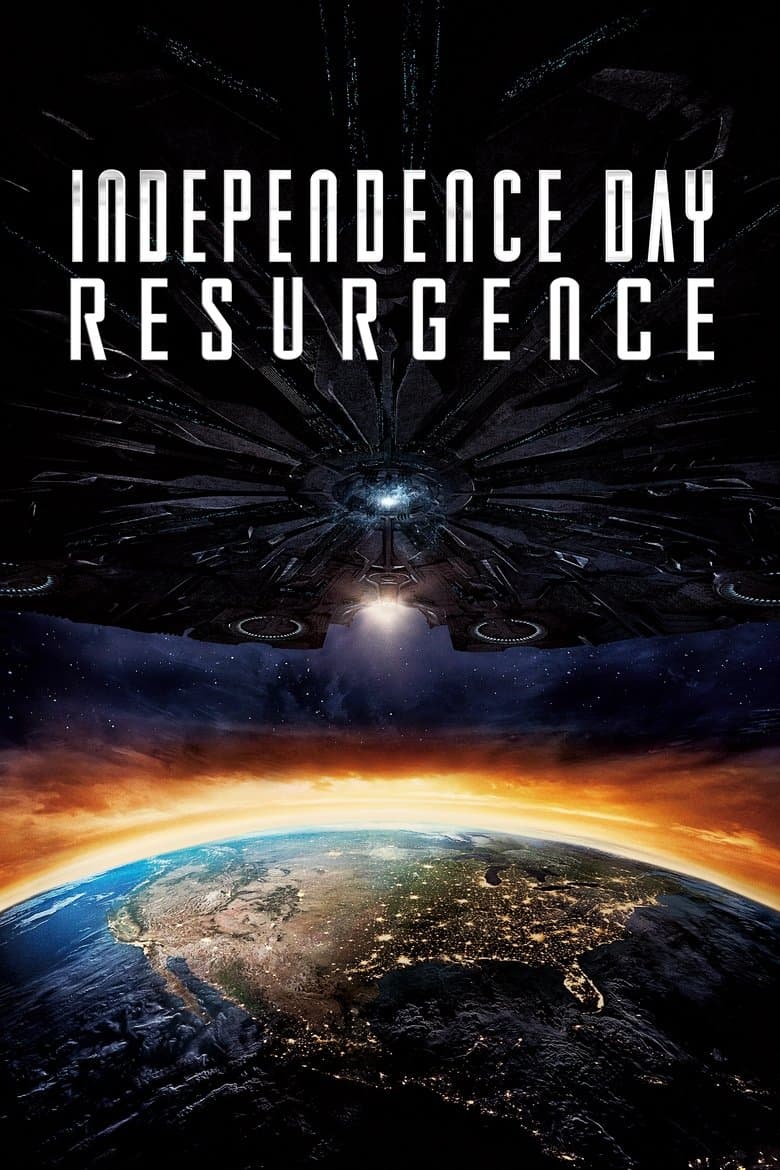
This science fiction movie takes place twenty years after the first alien attack on Earth. The nations of the world work together using alien technology to build a global defense system. When the aliens return with a much larger spaceship, a new generation of soldiers and scientists must fight to save humanity. The movie features visible representation choices, including a female U.S. President, multiple female fighter pilots, and a confirmed same-sex romance between two returning male scientists.
Community feedback
Was our 48% Woke rating accurate?
Breakdown
These are the editorial factors and ratings behind our score for Independence Day: Resurgence.
Woke representation / casting
The casting choices show clear representation goals. This includes Sela Ward as the first female President of the United States, multiple female fighter pilots, and a prominent African military leader. Crucially, the film includes Dr. Okun and Dr. Isaacs as a confirmed gay couple. Under our rules, this confirmed LGBTQ+ element adds strong extra weight, raising the score from a moderate baseline.
55%
Woke political dialogue
The film does not have explicit political preaching or social-justice lectures. The characters focus on global teamwork, fighting aliens, and standard military actions.
0%
Identity-driven story themes
The main story is a simple alien-invasion adventure. However, there is a minor subplot about the same-sex relationship between the two returning male scientists. While they do not show much physical affection on screen, director Roland Emmerich promoted it as a progressive step for representation. This confirmed LGBTQ+ element adds elevated weight to the score.
20%
Western institutional / cultural critique
The film does not criticize Western institutions, capitalism, or traditional families in an activist way. It shows a future where national borders do not matter and the world is united, but this is a common sci-fi trope rather than an attack on Western culture.
3%
Woke character or canon changes
The movie changes the relationship of returning characters Dr. Okun and Dr. Isaacs, turning their professional friendship from the first film into a same-sex romance. This retrofitted LGBTQ+ relationship counts as a change to established canon and adds extra weight under our rules.
28%
Anti-woke backlash and complaints
Most viewer complaints focused on the bad script and pandering to China. However, some anti-woke viewers complained about the borderless global themes, the Hillary Clinton-style female president, and the promotion of the same-sex romance as unnecessary identity signaling.
22%
Creator track record context
Openly gay director Roland Emmerich (Woke score: 31) has a history of supporting progressive causes and putting liberal themes like climate change in his films. Co-writer Dean Devlin (Woke score: 21) has a milder progressive history. The rest of the crew has no public record of political activism.
24%
Production
Movie · 2022
A mysterious force knocks the moon from its orbit around Earth and sends it hurtling on a collision course with life as we know it.
Movie · 2023
When his attempt to save his family inadvertently alters the future, Barry Allen becomes trapped in a reality in which General Zod has returned and there are no Super Heroes to…
Movie · 2016
16-year-old Cassie Sullivan tries to survive in a world devastated by the waves of an alien invasion that has already decimated the population and knocked mankind back to the…
Movie · 2018
As the Avengers and their allies have continued to protect the world from threats too large for any one hero to handle, a new danger has emerged from the cosmic shadows: Thanos.
Movie · 2023
65 million years ago, the only 2 survivors of a spaceship from Somaris that crash-landed on Earth, must fend off dinosaurs to reach the escape vessel in time before an imminent…
Movie · 2021
Peter Parker is unmasked and no longer able to separate his normal life from the high-stakes of being a super-hero.
Movie · 2024
Eddie and Venom are on the run. Hunted by both of their worlds and with the net closing in, the duo are forced into a devastating decision that will bring the curtains down on…
Movie · 2024
Following their explosive showdown, Godzilla and Kong must reunite against a colossal undiscovered threat hidden within our world, challenging their very existence – and our own.
