
Becket Redfellow is a working-class man who was shut out of his rich family before he was born. He learns that he can inherit billions if he removes the relatives ahead of him. He plans murders, tricks people, and tells the story from death row while a priest waits for his confession. The film is a dark American comedy thriller about a strange family and a man who wants revenge.
The film's main social idea is that wealth, status, and family power can push people toward cruel choices. Becket sees money as the answer to every problem, while Ruth values a small and honest life. The story mocks spoiled heirs, Wall Street ambition, and people who sell success as a product. Becket's murders turn the class conflict into personal revenge, and the ending shows that getting rich cannot repair his life.
Community feedback
Was our 22% Woke rating accurate?
Breakdown
These are the editorial factors and ratings behind our score for How to Make a Killing.
Woke representation / casting
Not present. The film does not use casting to make an identity statement. Ruth is a schoolteacher and love interest, and her ethnicity is not part of the plot.
0%
Woke political dialogue
Not present. The film discusses money, happiness, and ambition, but it does not give activist speeches about race, gender, sexuality, or DEI. The dialogue stays tied to Becket’s crimes and personal choices.
0%
Identity-driven story themes
Not present. The characters are defined by wealth, family ties, and greed rather than by a race, sex, or queer struggle. Ruth’s wish for a modest life is a personal contrast to Becket’s ambition.
0%
Western institutional / cultural critique
The story repeatedly targets inherited wealth, billionaire fortunes, Wall Street ambition, and the belief that money solves every problem. Becket’s rich relatives and a Christian-rock pastor are mocked as people who use wealth, status, or success advice to control others. Ruth offers a competing view that a small and honest life can be enough. The film warns about greed, but it does not build a wider attack on patriarchy, whiteness, or Western institutions.
32%
Woke character or canon changes
Not relevant. The movie shifts the 1949 British story to modern America and changes names, motives, and murder scenes. Those changes update the plot without making identity or DEI the reason for the changes.
0%
Anti-woke backlash and complaints
A small niche account called the film anti-capitalist “eat the rich” propaganda. One tiny post called a female character’s storyline a boring “girlboss arc,” even though the user still liked the movie. These posts had very little engagement and did not grow into a boycott, review-bombing effort, or organized campaign. Most public discussion focused on the cast, humor, plot, and remake quality.
12%
Creator track record context
Ford has a mild track record of anti-wealth and economic hardship stories, but not strong identity activism. His current interviews stress wealth inequality, American ambition, and the pressure to chase status. Lucy Bevan has a stored record of supporting on-screen diversity and gender balance. The other stored creator profiles show little public activism, so the overall context is mild.
18%
Production
Movie · 2024
When a man is offered a million dollars to play a game in which hunters try to kill him, he thinks he has found the perfect loophole: they can only attack when he’s alone.
Movie · 2025
When the girl of his dreams is kidnapped, everyman Nate turns his inability to feel pain into an unexpected strength in his fight to get her back.
Movie · 2019
Los Angeles, 1969. TV star Rick Dalton, a struggling actor specializing in westerns, and stuntman Cliff Booth, his best friend, try to survive in a constantly changing movie…
Movie · 2024
When top hitman Joe Flood is diagnosed with a terminal illness, he decides to take matters into his own hands – by taking a hit out on himself.

Movie · 2023
Inspired by a true story, an oddball group of cops, criminals, tourists and teens converge in a Georgia forest where a 500-pound black bear goes on a murderous rampage after…

Movie · 2026
A dysfunctional couple head to a remote cabin to "reconnect", but each has secret intentions to kill the other.
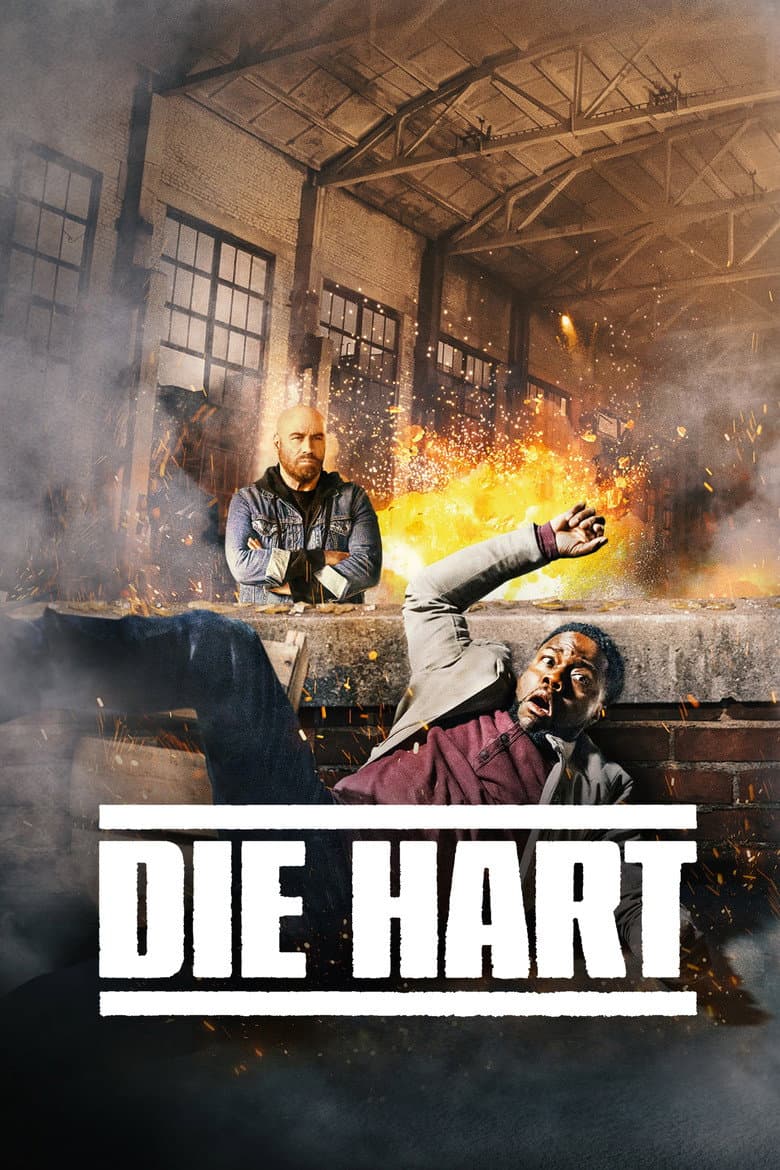
Movie · 2023
Kevin Hart - playing a version of himself - is on a death-defying quest to become an action star. And with a little help from John Travolta, Nathalie Emmanuel, and Josh Hartnett -…

Movie · 2016
Horror junkie Joe Foster gets to live out his ultimate scary movie fantasy courtesy of Fear Inc., a company that specializes in giving you the fright of your life.
