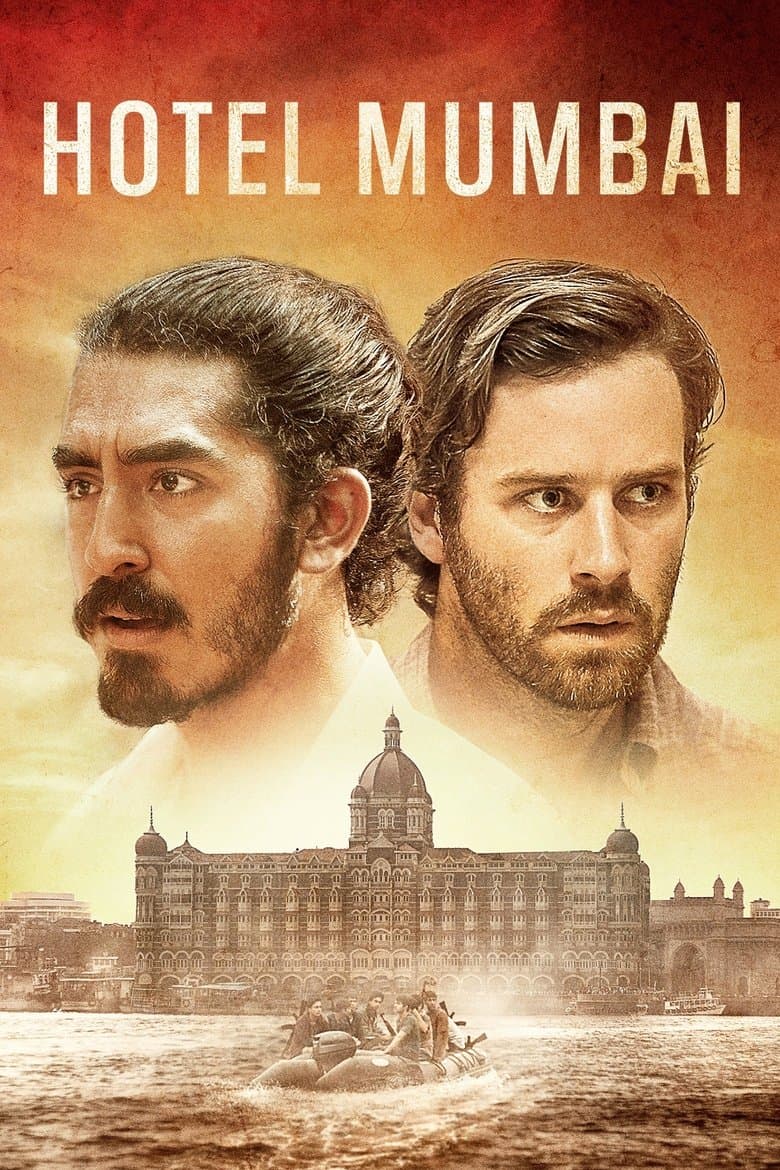
Hotel Mumbai follows Arjun, a young waiter at Mumbai’s Taj Mahal Palace Hotel. Armed attackers trap staff and guests inside the burning hotel on November 26, 2008. Arjun, chef Hemant Oberoi, and several guests hide people, guide them to safer rooms, and protect their families. The story covers three days of gunfire, fear, sacrifice, and rescue. The film creates a tense, graphic, and deeply sad account of people facing a real terrorist attack.
The film shows Arjun’s Sikh faith through his turban, beard, and calm answer to a frightened white guest. Zahra, a Muslim mother, prays while a gunman struggles with the difference between her faith and his violent orders. These scenes show Muslims as victims as well as attackers. They also support religious understanding and coexistence. The main story remains focused on hotel workers and guests who choose courage, loyalty, and care during the attack. These identity themes matter, but they support the larger story about survival and human resilience.
Community feedback
Was our 33% Woke rating accurate?
Breakdown
These are the editorial factors and ratings behind our score for Hotel Mumbai.
Woke representation / casting
Dev Patel asked Anthony Maras to make Arjun Sikh. The film gives the Sikh waiter a heroic lead role and builds a scene around his turban. Patel and Maras say the choice addresses cultural and racial issues and highlights an underrepresented community. Nazanin Boniadi plays an Iranian Muslim mother whose faith shapes a major survival scene. Most other identities fit the hotel’s Indian staff and international guests.
33%
Woke political dialogue
Not present. The film contains no political dialogue.
0%
Identity-driven story themes
The film contrasts Zahra’s Muslim prayer with the gunmen’s violent use of Islam. Zahra uses her faith to survive during the attack. The gunmen use religion to justify murder. Arjun explains his Sikh turban after a white guest fears him because of his appearance. Maras and Boniadi describe these identity scenes as a call for coexistence.
31%
Western institutional / cultural critique
An older white guest accuses Zahra after hearing an unfamiliar language. The film shows Arjun correcting another guest’s fear of his turban. These scenes criticize racial and religious prejudice among Western guests. The story does not attack Western institutions. The story does not build a wider case against traditional family life.
12%
Woke character or canon changes
Not relevant. The film has no relevant character or canon changes.
0%
Anti-woke backlash and complaints
Some Reddit viewers call the Muslim prayer scene “PC monkey balancing.” A few viewers say the film adds an Islamophobia lesson during a terrorist attack. News reports focus more on terrorist humanization and release delays after Christchurch. Those comments remain scattered and do not form a broad campaign.
10%
Creator track record context
Anthony Maras made an earlier short about Afghan refugees in Australian detention. John Collee has a mild environmental focus in past work. Jomon Thomas stresses cross-cultural and diverse audience appeal. Maras, Patel, and Boniadi frame this film around faith, unity, and cultural understanding.
24%
Production
Movie · 2019
After fighting his demons for decades, John Rambo now lives in peace on his family ranch in Arizona, but his rest is interrupted when Gabriela, the granddaughter of his…
Movie · 2016
An American Ambassador is killed during an attack at a U.S. compound in Libya as a security team struggles to make sense out of the chaos.
Movie · 2021
Madrid, Spain, 2010. While the whole city follows the national team's successful participation in the World Cup, a group of daring thieves look for a way into one of the most…
Movie · 2023
Ex-con Russell Gaines is attempting to rebuild his life with the help of his father, Mitchell. However, the arrival of Maben sends his new life into chaos, leading the pair to go…
Movie · 2023
A tormented father witnesses his young son die when caught in a gang's crossfire on Christmas Eve. While recovering from a wound that costs him his voice, he makes vengeance his…
Movie · 2017
An American sniper and his spotter engage in a deadly cat-and-mouse game with an Iraqi sniper.
Movie · 2025
A broker of lucrative payoffs between corrupt corporations and the individuals who threaten them breaks his own rules when a new client seeks his protection to stay alive.
Movie · 2022
Shiva, a tribal vagabond lives with his mother in hamlet, stays away from the traditional Daivaradhane and Bhoota Kola legacy due to an unforgettable childhood incident.
