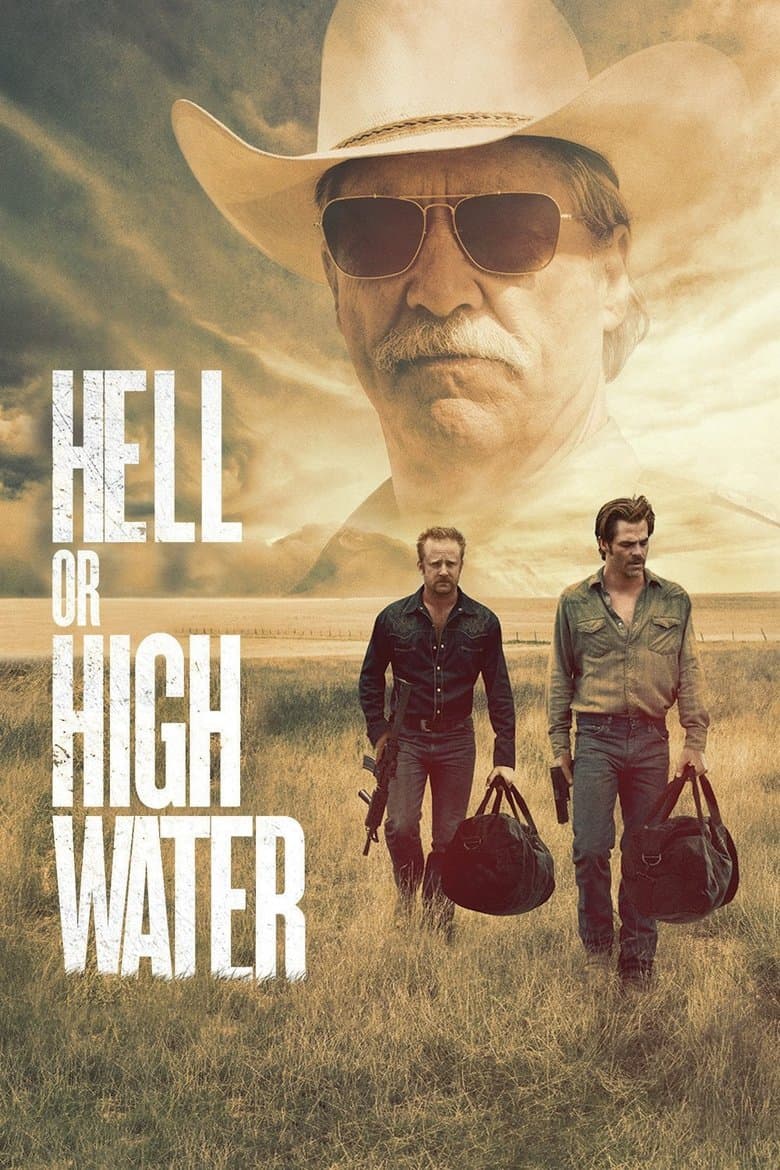
Hell or High Water follows Toby Howard, a divorced father who wants to protect his two sons. He joins his reckless ex-con brother Tanner in robbing branches of the bank that plans to take their mother’s West Texas ranch. Texas Ranger Marcus Hamilton and his native American partner Alberto Parker chase them across empty towns, ranch roads, and dry fields. The film feels tense, rough, funny, and sad as the brothers face money trouble, family wounds, and the cost of violence.
The film gives some space to the history of native people through Alberto and a talk about land taken by white settlers. Marcus also makes repeated racist jokes about Alberto, and the story treats their bond as both rough and caring. The main message stays focused on poverty, fatherhood, brotherhood, rural decline, and anger at a bank that profits from struggling families. Its political ideas stay close to the lives of the characters and the dying towns around them.
Community feedback
Was our 30% Woke rating accurate?
Breakdown
These are the editorial factors and ratings behind our score for Hell or High Water.
Woke representation / casting
Not present in this title.
0%
Woke political dialogue
Several characters say the bank has been taking from local people for years. Billy Rayburn says the lender kept the Howard family poor while waiting to take its land and oil. Alberto answers Marcus’s speech about a dying America by pointing to Native land loss. A brief TV exchange mocks Pat Robertson’s attack on Obama, but the film keeps these ideas inside character talk and the crime story.
30%
Identity-driven story themes
Alberto’s Native background matters in a short talk about how land was taken from his people. Marcus’s repeated racist jokes turn their partnership into a small identity conflict. The brothers’ main arc follows poverty, fatherhood, brotherhood, and loyalty. The film connects the land history to the bank’s seizure of the ranch, but the identity theme stays secondary.
25%
Western institutional / cultural critique
The bank is shown as a faceless force that keeps poor families in debt and takes their land. The film links that loss to Alberto’s point that Native land was taken before banks began taking white families’ land. That gives the movie a light wider critique of banks, wealth, and land history. The film does not attack family life, ordinary men, or Christianity as social problems.
27%
Woke character or canon changes
Not relevant. fully original screenplay with no source material, legacy IP, or historical figure reinterpretations.
0%
Anti-woke backlash and complaints
Not present in this title.
0%
Creator track record context
David Mackenzie has no known pattern of identity activism. Taylor Sheridan is known for traditional stories and public criticism of woke ideas. In title interviews, Mackenzie calls the film political, while Sheridan links it to race, poverty, and the history of land taken from native people. That adds a real social-history signal, but the creators do not present the film as a strong activist project.
18%
Production
Movie · 1994
Imprisoned in the 1940s for the double murder of his wife and her lover, upstanding banker Andy Dufresne begins a new life at the Shawshank prison, where he puts his accounting…
Movie · 2019
Pennsylvania, 1956. Frank Sheeran, a war veteran of Irish origin who works as a truck driver, accidentally meets mobster Russell Bufalino.
Movie · 2019
A charismatic New York City jeweler always on the lookout for the next big score makes a series of high-stakes bets that could lead to the windfall of a lifetime.

Movie · 2026
After his estranged son gets embroiled in a Nazi plot, self-exiled gangster Tommy Shelby must return to Birmingham to save his family — and his nation.

Movie · 2019
A chronicle of the crimes of Ted Bundy, from the perspective of his longtime girlfriend, Elizabeth Kloepfer, who refused to believe the truth about him for years.
Movie · 2019
A young agent is tasked with investigating a tangled web of corruption and fraud in New York.
Movie · 2019
In the wake of his dramatic escape from captivity, Jesse Pinkman must come to terms with his past in order to forge some kind of future.
Movie · 2016
As a math savant uncooks the books for a new client, the Treasury Department closes in on his activities and the body count starts to rise.
