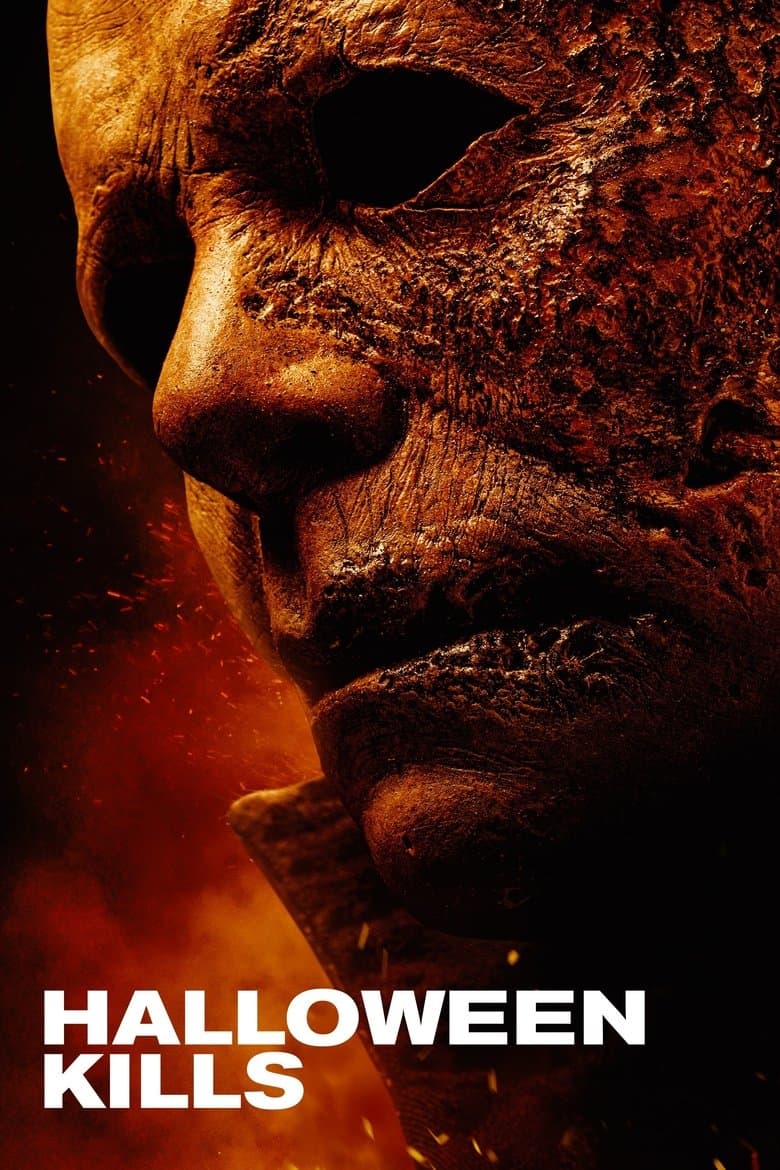
Minutes after the last film ends, Michael Myers escapes Laurie Strode’s burning trap and starts killing again across Haddonfield. Laurie is stuck in the hospital while other survivors, including Tommy Doyle, form a vigilante mob that chants that evil dies tonight. The crowd mistakes an escaped patient for Michael and cannot stop the real killer. After a false victory, the mob is massacred, and Karen is killed in the final moments. The story is a bloody middle chapter about pure evil and a town that turns on itself.
On screen, a gay couple named Big John and Little John live in the Myers house and die as Michael’s victims in a memorable comic beat. The cast also includes some diverse supporting roles and multi-generation Strode women as lead survivors. Those details matter, but the core plot is still Michael’s rampage and the town’s self-destructive mob. People on screen talk about fear, pure evil, vengeance, and the chant, not about race, gender ideology, or sexuality politics. The film also shows how panicky crowds, bad information, and community rage make things worse, without turning into a sustained attack on faith, patriarchy, or capitalism.
Community feedback
Was our 32% Woke rating accurate?
Breakdown
These are the editorial factors and ratings behind our score for Halloween Kills.
Woke representation / casting
The film has a modern Illinois ensemble with some diverse supporting roles and multi-generation Strode women as lead survivors. Big John and Little John are a clearly presented gay couple who live in the Myers house in a memorable comic beat before they are killed. This is not a franchise-lead identity overhaul or a quota hero team. The queer couple is the main identity-forward casting signal and lifts this above a pure baseline.
30%
Woke political dialogue
Talk in the story centers on fear, pure evil, vengeance, and the Evil Dies Tonight chant. It does not center DEI, race, gender ideology, or sexuality politics. Critics noted half-baked topical social chatter around the mob. That noise is about civic anger and mob justice, not identity-political speeches.
12%
Identity-driven story themes
The core story is Michael’s rampage and a town’s self-destructive vigilantism, including mob mistakes, groupthink, and unkillable evil. It is not an identity-politics plot. A confirmed LGBTQ couple and continued multi-generational female survivor trauma are real but not central. Queer inclusion raises this factor without making the film queer-themed.
28%
Western institutional / cultural critique
Viewers can see that panicky mob justice, bad information, and community rage make things worse. Interviews frame misinformation and mob mentality as timely, and some critics read an angry-crowd allegory. This is not a sustained attack on Christianity, patriarchy, whiteness, or capitalism. It reads more as a modern caution about vengeful crowds than as activist identity critique.
28%
Woke character or canon changes
Not relevant. No identity-driven race or gender swaps of established Myers, Strode, or legacy characters.
0%
Anti-woke backlash and complaints
Evidence is thin. There were isolated low-engagement claims of woke nonsense or forced social messaging. A few viewers mocked marketing that sold the trilogy as important social commentary. Mainstream pushback was mostly about quality, messy structure, a dumb mob, and gore without scares, not a sustained anti-woke campaign.
10%
Creator track record context
Cached scores for key people are low to moderate, such as McBride at 11, Green at 19, Teems at 5, Carpenter at 22, and Blum at 27, with casting directors around 5 to 12. The pattern is commercial horror, comedy, and franchise craft. It is not a body of identity-first activist work. Use this only as supporting context.
17%
Production
Movie · 2023
Eight year old Peter is plagued by a mysterious, constant tapping from inside his bedroom wall—one that his parents insist is all in his imagination.
Movie · 2017
Several years after the tragic death of their little girl, a doll maker and his wife welcome a nun and several girls from a shuttered orphanage into their home, soon becoming the…
Movie · 2024
Five years after surviving Art the Clown's Halloween massacre, Sienna and Jonathan are still struggling to rebuild their shattered lives.
Movie · 2022
Inspired by the true story of a family who believed they were possessed by spirits. This film follows a woman who must protect her child from a curse.
Movie · 2025
Paranormal investigators Ed and Lorraine Warren take on one last terrifying case involving mysterious entities they must confront.
Movie · 2024
A live broadcast of a late-night talk show in 1977 goes horribly wrong, unleashing evil into the nation's living rooms.
Movie · 2022
Trapped on her family’s isolated farm, Pearl must tend to her ailing father under the bitter and overbearing watch of her devout mother.
Movie · 2026
After breaking the mysterious "One Wish Willow" to win his crush's heart, a hopeless romantic finds himself getting exactly what he asked for but soon discovers that some desires…
