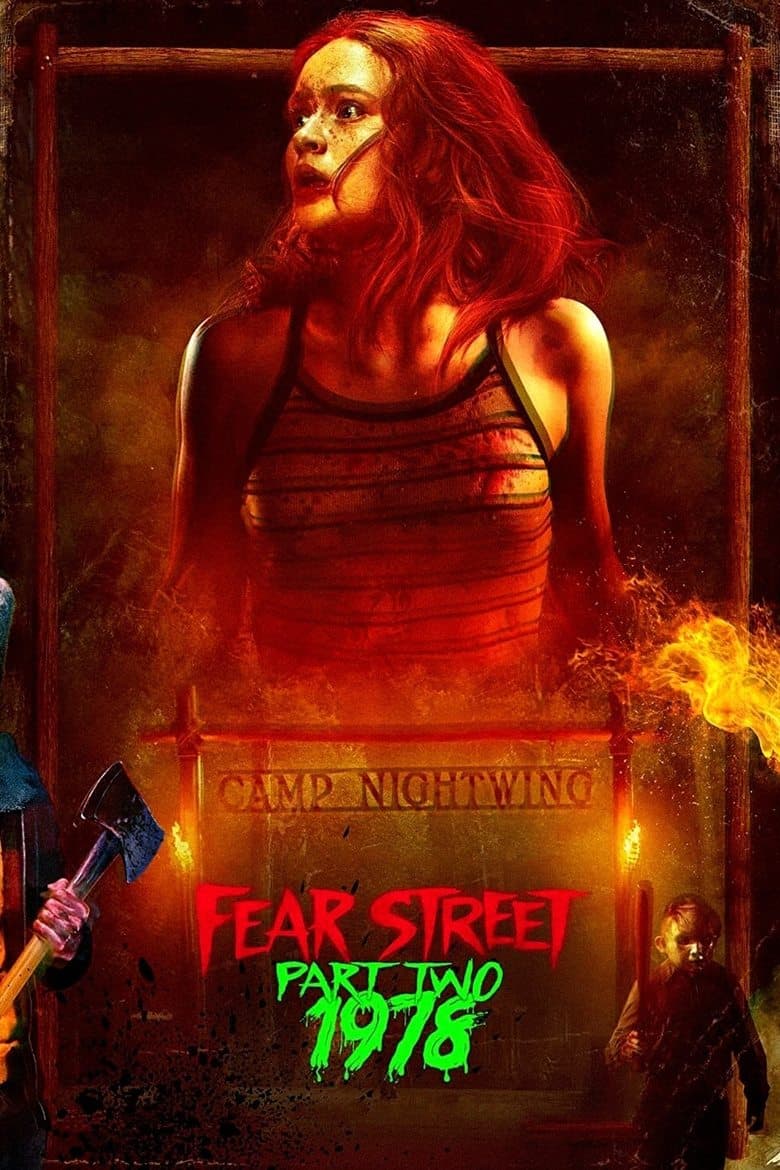
In 1978, sisters Ziggy and Cindy Berman go to Camp Nightwing, where kids from poor Shadyside and rich Sunnyvale already hate each other. A camp counselor becomes possessed and starts killing people with an axe. Ziggy, a tough outsider, and Cindy, the “good” older sister, must team up to stop the bloodshed and learn more about a long curse on their town. The movie is bloody summer-camp horror with sister fights, class tension, and a dark twist about who lives.
The score is pulled up most by class themes and by queer material that ties this film to the rest of the trilogy. Viewers clearly see rich Sunnyvale kids bully and hurt poor Shadyside kids, and the camp massacre hits Shadyside harder. The 1994 story wrapping the film still stars Deena and Sam, a young lesbian couple trying to break the curse, and creators later said counselor Alice and Cindy had romantic feelings for each other even though the movie keeps that mostly under the surface. The film also turns R.L. Stine’s non-political teen-horror brand into a story about outsiders and queer leads. Normal viewers notice the class war and the lesbian frame story; the on-screen Alice/Cindy romance is quieter unless they know the interviews.
Community feedback
Was our 83% Woke rating accurate?
Breakdown
These are the editorial factors and ratings behind our score for Fear Street: 1978.
Woke representation / casting
Camp leads are mostly white teens (Ziggy, Cindy, Nick, Tommy). The 1994 wrap features black leads Deena and Josh and lesbian Sam. Alice is played by non-binary actor Ryan Simpkins with a queer-coded role. Diversity is real but not a hard quota wall of “brilliant identity archetypes” in the 1978 half; LGBTQ casting still adds clear weight.
48%
Woke political dialogue
Talk is mostly camp insults, class digs, and curse lore, not modern activist speeches about race, gender, or DEI. Class trash-talk is frequent but not slogan-style identity politics.
28%
Identity-driven story themes
Rich vs poor town identity is front and center and hard to miss. Sister bond and “women stick together” run through the camp plot. Queer content is real but secondary here: Deena/Sam in the frame, Alice/Cindy romance mostly subtext confirmed off-screen. LGBTQ elements raise the score under the stronger queer-weighting rule without making 1978 as queer-led as 1994.
60%
Western institutional / cultural critique
The film hammers a class system where Sunnyvale kids win and Shadyside kids suffer, with Nick as heir to police power. That sets up a wealth-and-power critique without long lectures. Ordinary rich-vs-poor camp rivalry is genre-normal; the curse-as-class-trap framing still reads as modern social critique to many viewers.
48%
Woke character or canon changes
Stine’s Fear Street books were not queer or activist. The movies rebuild the brand around queer heroes and outsider identity. Adding lesbian frame leads and creator-confirmed Alice/Cindy feelings is an identity-driven change to the franchise, not a neutral book cut-down.
65%
Anti-woke backlash and complaints
Some viewers and comment threads call the trilogy (including this entry) LGBTQ or feminist “agenda” horror. Pushback is real but mostly trilogy-wide and mild for 1978 alone; many anti-woke voices focus more on 1994/1666. No huge standalone 1978 culture-war scandal.
32%
Creator track record context
Key creative drive comes from Janiak (70) and Graziadei (68), who publicly built the series around queer love and marginalized “otherness.” Olkewicz (18) and Stine (26) pull the average down; most producers sit low. Overall creative context still strongly supports identity-forward horror.
64%
Production
Movie · 2017
Law enforcement finds itself chasing the ghost of a man dead for over a decade, embroiled in a diabolical new game that's only just begun.
Movie · 2017
After a mysterious global crisis, a young girl is left alone to hide from a malevolent power that stalks her home.

Movie · 2025
Plagued by a violent recurring nightmare, college student Stefanie heads home to track down the one person who might be able to break the cycle and save her family from the grisly…
Movie · 2020
On the trail of a missing girl, an ex-cop comes across a secretive group attempting to summon a terrifying supernatural entity.
Movie · 2025
One year after her sister Melanie mysteriously disappeared, Clover and her friends head into the remote valley where she vanished in search of answers.

Movie · 2016
Father and son coroners receive a mysterious unidentified corpse with no apparent cause of death. As they attempt to examine the "Jane Doe," they discover increasingly bizarre…
Movie · 2017
A young man and his three younger siblings are plagued by a sinister presence in the sprawling manor in which they live.
Movie · 2021
Reeling from the unexpected death of her husband, Beth is left alone in the lakeside home he built for her. Soon she begins to uncover her recently deceased husband's disturbing…
