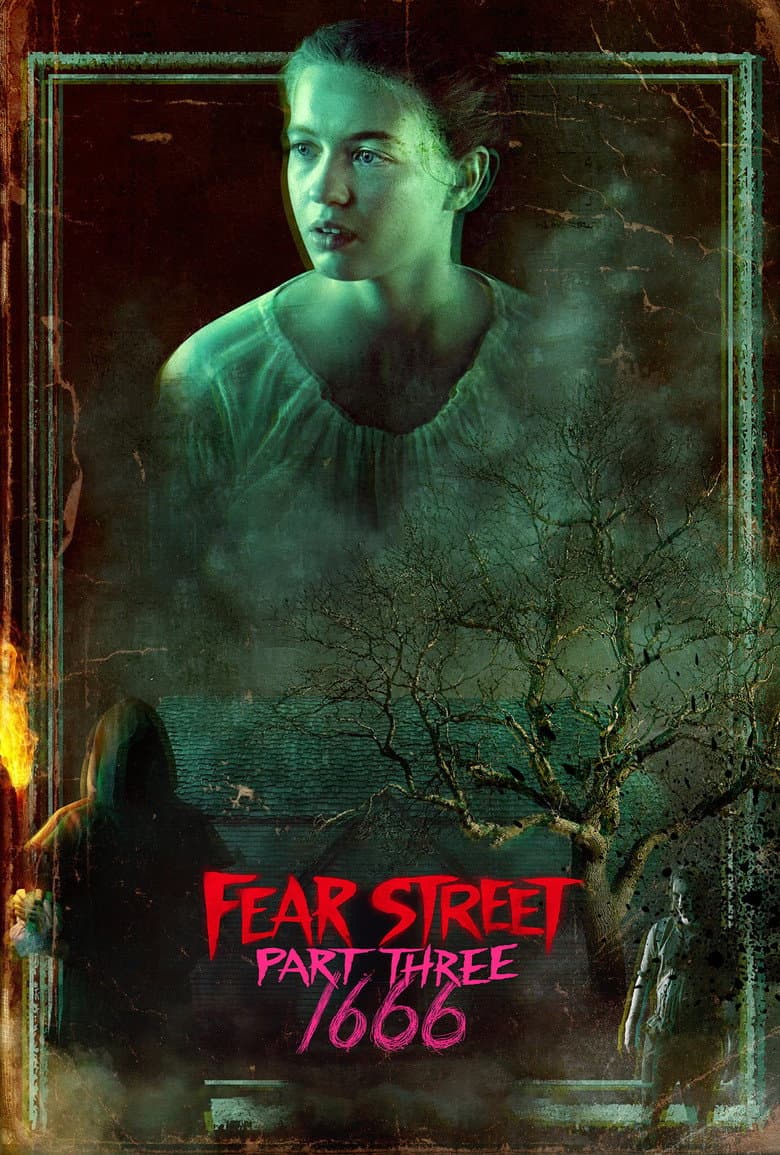
This movie is the final part of a horror trilogy based on R.L. Stine's teen books. The story is split between a dark colonial settlement in 1666 and a modern town in 1994. In the past, a young woman named Sarah Fier struggles to survive when her village starts a hysterical witch-hunt. In the present, a group of teenagers tries to solve the mystery of this ancient curse to save their friend. The overall tone is tense, bloody, and full of suspense. An average viewer will easily notice several strong woke elements in the narrative. The entire plot is driven by a central lesbian romance between the main characters in both eras. The film also focuses on modern identity politics by showing how a wealthy white patriarch oppresses marginalized people. Traditional Western institutions and religious groups are shown as deeply corrupt and cruel.
Community feedback
Was our 98% Woke rating accurate?
Breakdown
These are the editorial factors and ratings behind our score for Fear Street: 1666.
Woke representation / casting
The movie uses a diverse cast for its 17th-century Puritan setting. The main characters, Sarah and Hannah, are in a central lesbian relationship that mirrors the modern queer romance in the 1994 timeline. Casting a woman of color as the historical lead who faces persecution is a clear identity-first choice. The story places this queer romance at the very center of the narrative, giving it high representation priority over traditional horror structures.
85%
Woke political dialogue
The characters openly speak about misogyny, religious hypocrisy, and homophobia. While the movie avoids using modern slang, the dialogue in the 1666 section directly addresses how the powerful use witch trials to punish women who do not conform. The script frames the conflict through an activist lens, with characters explicitly talking about how the community uses false accusations to oppress those they consider different.
72%
Identity-driven story themes
The entire plot is built around identity themes. The curse haunting the town is revealed to be a lie invented by a powerful white man to scapegoat a young lesbian couple. The story frames the historical and modern suffering of the town as a direct result of homophobia, misogyny, and patriarchal oppression. The ultimate goal of the heroes is to expose this historical injustice and defeat the systemic evil of the ruling class.
90%
Western institutional / cultural critique
The movie strongly critiques Western religious and social structures. It portrays the Puritan church and colonial leadership as toxic, hypocritical, and abusive. It directly links this historical patriarchy to modern institutions, framing the local sheriff and law enforcement as corrupt villains who protect their family legacy. The film also critiques capitalism and wealth inequality, showing that the rich suburb thrives by sacrificing the poor.
82%
Woke character or canon changes
The movie heavily alters R.L. Stine's original book series. In the books, Sarah Fear's backstory does not feature queer romance, identity politics, or critiques of patriarchal power. The filmmakers intentionally rewrote the entire backstory to center on a lesbian love story and a critique of systemic oppression. The creators publicly stated they made these changes to inject LGBTQ+ representation into a historically non-political franchise.
78%
Anti-woke backlash and complaints
There was noticeable backlash from conservative-leaning horror fans and online communities. Critics complained that the movie replaced the simple, fun scares of R.L. Stine's books with modern social-justice themes, anti-patriarchy messaging, and forced representation. Many fans expressed frustration that the film felt agenda-driven, though the backlash did not lead to a large mainstream boycott.
45%
Creator track record context
The key creative team has a noticeable history of progressive, queer-centric storytelling. Writers Leigh Janiak and Phil Graziadei have a strong track record of championing LGBTQ+ representation and systemic critiques in their horror projects. Writer Kate Trefry is known for developing queer characters in Stranger Things. This track record aligns directly with the activist themes present in the final film.
58%
Production
Movie · 2017
A group of college friends reunite for a trip to the forest, but encounter a menacing presence in the woods that's stalking them.
Movie · 2017
Law enforcement finds itself chasing the ghost of a man dead for over a decade, embroiled in a diabolical new game that's only just begun.
Movie · 2022
After witnessing a bizarre, traumatic incident involving a patient, Dr. Rose Cotter starts experiencing frightening occurrences that she can't explain.
Movie · 2025
A woman's obsessive search for her missing sister leads her into a terrifying mystery at the hands of an unknown evil.
Movie · 2017
After a mysterious global crisis, a young girl is left alone to hide from a malevolent power that stalks her home.
Movie · 2017
Two young women at a prestigious prep school are assailed by an evil, invisible power when they're stranded over winter break.
Movie · 2026
The host of a popular paranormal podcast becomes haunted by terrifying recordings mysteriously sent her way.
Movie · 2025
Plagued by a violent recurring nightmare, college student Stefanie heads home to track down the one person who might be able to break the cycle and save her family from the grisly…
