
Movie review
February 12, 2020 · 109 min · PG-13 · Horror · Fantasy · Mystery · Adventure
Fantasy Island is a 2020 Blumhouse horror film in which five contest winners arrive at a remote tropical resort run by Mr. Roarke. He promises to make their personal fantasies come true, but the experiences turn into deadly nightmares that connect through a central twist and themes of regret, revenge, and consequences. The movie features a diverse ensemble cast with Michael Peña as Mr. Roarke and includes an openly gay guest character, Brax, whose luxury party fantasy explicitly shows gay elements such as entering a gay stripper tent and later commenting on the activity. Marketing and the core premise focus on wish fulfillment turning dark, with no activist framing in promotion or main story.
Community feedback
Was our 36% Woke rating accurate?
Breakdown
These are the editorial factors and ratings behind our score for Fantasy Island.
Woke representation / casting
Ensemble includes Latino actor Michael Peña as Mr. Roarke and prominent Asian-American performers (Maggie Q as a lead guest, Jimmy O. Yang as Brax). Brax is openly gay; his fantasy sequence explicitly depicts him entering a gay stripper tent and commenting on sexual activity afterward. Critics labeled him a "Twofer Token Minority" and flagged the choice as progressive signaling in the party context.
35%
Woke political dialogue
No activist, DEI, identity-based, or left-wing political dialogue. Conversations and narration stay on personal fantasies, regrets, survival, and the island's rules.
0%
Identity-driven story themes
Core premise and arcs center on regret, revenge, forgiveness, selfishness versus selflessness, and consequences of wish fulfillment. Incidental but explicit LGBTQ+ content appears in one guest's party fantasy (Brax); it is not central to the mystery or emotional throughline and draws no broader social-justice framing.
30%
Western institutional / cultural critique
The military fantasy honors a father with no critique of institutions, masculinity, or Western norms. Personal stories and the "natural conclusion" rule carry no activist institutional or cultural messaging.
0%
Woke character or canon changes
The original TV series' iconic Tattoo sidekick (played by little person actor Hervé Villechaize) is reimagined as Brax Weaver, an Asian-American gay character who assumes the assistant role at the end. This adaptational sexuality and casting for the canon figure was noted by critics and trope documentation as progressive or token. Mr. Roarke casting maintains Latino ethnicity similar to the original Ricardo Montalbán. Other changes are standard loose adaptation.
22%
Anti-woke backlash and complaints
Limited scattered viewer comments and critic asides treat the gay character or diversity elements as "woke agenda" or forced progressive inclusion. One detailed review explicitly criticized Brax being made gay "for no obvious reason other than to impress upon us that it is progressive." No major news coverage, social campaigns, or broad public debate framed the film as activist or identity-driven. Most complaints target script, acting, and execution.
15%
Creator track record context
Writers and director Jeff Wadlow (cached 6/100), Jillian Jacobs (15/100), and Christopher Roach (10/100) have genre-focused careers without activist patterns. Producers Jason Blum (27/100) has mild liberal public commentary and some political notes in prior films but remains commercially horror-oriented; Marc Toberoff (29/100) has an ultraliberal background without identity-driven creative output. Original creator Gene Levitt had a conventional mid-20th-century TV career on adventure series with no activism.
17%
Production
Movie · 2025
A treasure-hunting mastermind assembles a team for a life-changing adventure. But to outwit and outrun threats at every turn, he'll need someone even smarter than he is: his…
Movie · 2016
A determined young woman and a damaged occultist risk their lives and souls to perform a dangerous ritual that will grant them what they want.
Movie · 2024
A young artist gets stranded in an extensive, immaculate forest in western Ireland, where, after finding shelter, she becomes trapped alongside three strangers, stalked by…

Movie · 2019
As the gang return to Jumanji to rescue one of their own, they discover that nothing is as they expect. The players will have to brave parts unknown and unexplored in order to…
Movie · 2020
Seven years since the Monsterpocalypse began, Joel Dawson has been living underground in order to survive. But after reconnecting over radio with his high school girlfriend Aimee…
Movie · 2023
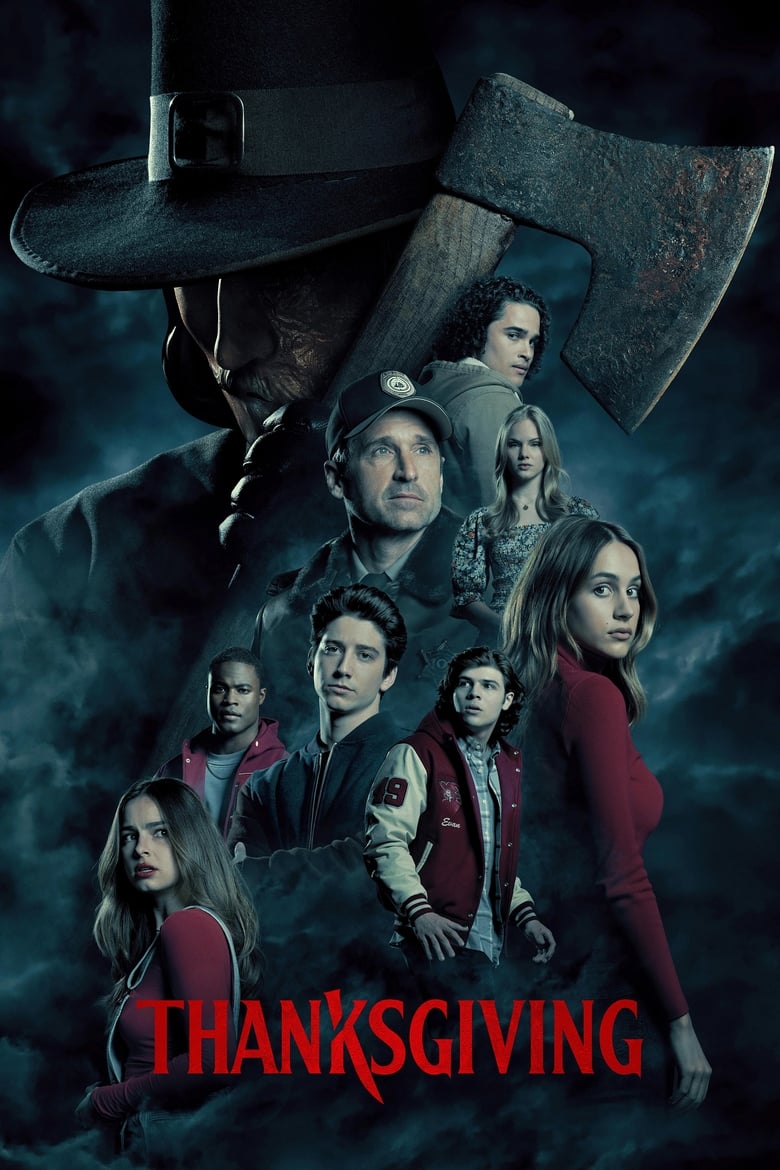
After a Black Friday riot ends in tragedy, a mysterious Thanksgiving-inspired killer terrorizes Plymouth, Massachusetts - the birthplace of the holiday.

Movie · 2017
When Mahendra, the son of Bāhubali, learns about his heritage, he begins to look for answers. His story is juxtaposed with past events that unfolded in the Mahishmati Kingdom.

Movie · 2017
A group of college friends reunite for a trip to the forest, but encounter a menacing presence in the woods that's stalking them.
