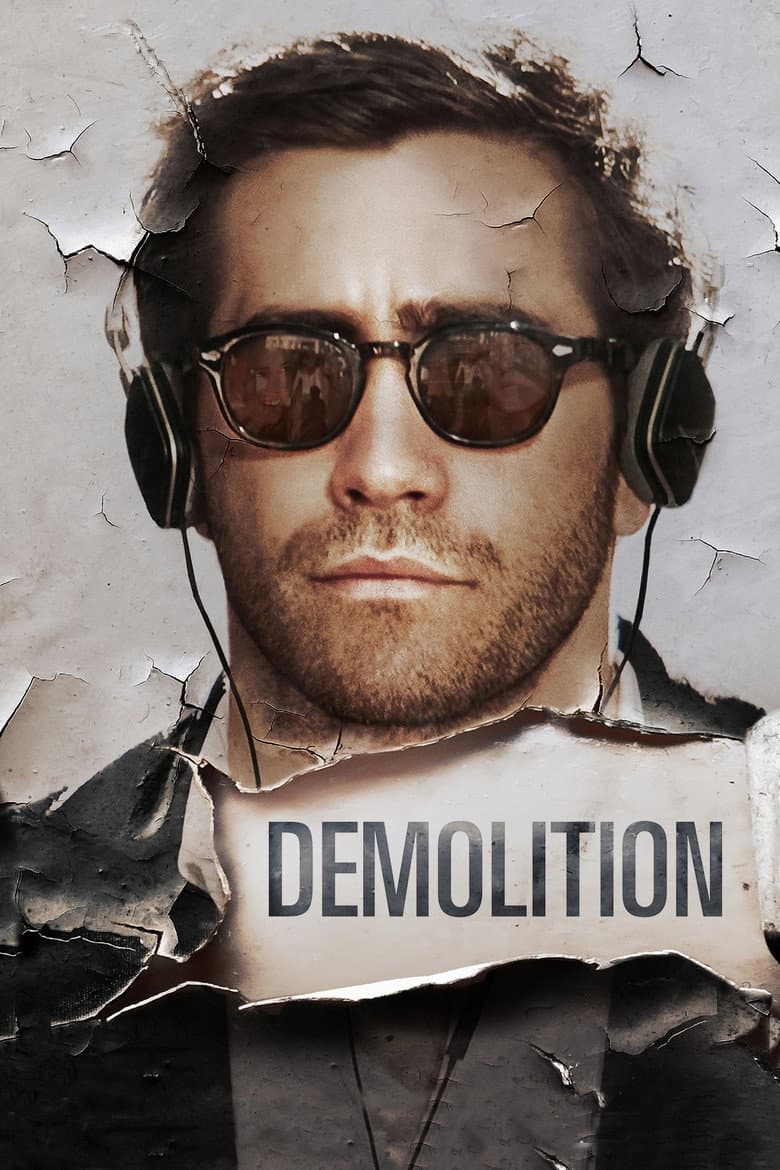
After his wife dies in a car crash, private-equity banker Davis Mitchell goes emotionally numb. He starts taking apart appliances, his house, and the life he used to live. Along the way he bonds with customer-service worker Karen and her troubled teenage son Chris. The movie is a grief dramedy about breaking things down so he can feel again. It is a character-driven story, not a political tract.
The main identity-related choice is supporting teen Chris as a gay and androgynous character. Chris faces sexual confusion, comes out, and is attacked in a gay-bashing scene. He also finds recovery and mentorship through his bond with Davis. That subplot is clear and used in the plot, so the film is often listed as LGBTQ-related. It stays secondary to the main story of Davis and his grief.
Community feedback
Was our 39% Woke rating accurate?
Breakdown
These are the editorial factors and ratings behind our score for Demolition.
Woke representation / casting
Lead roles follow a standard modern-NYC lineup with Gyllenhaal as the banker, Watts as a single mom and customer-service worker, and Cooper as the father-in-law. The clear identity-facing choice is supporting teen Chris as a gay and androgynous character. That is not a race-swap or one-of-each ensemble. It is a deliberate queer supporting presence that viewers notice.
30%
Woke political dialogue
Not present. Talk centers on grief, numbness, honesty, and personal messiness with no sustained activist speeches about race, gender systems, DEI, or identity politics.
0%
Identity-driven story themes
The core arc is complicated grief and literal and figurative demolition. A real secondary identity thread follows Chris’s sexuality confusion, coming out, a climactic gay-bashing, and recovery and mentorship with Davis. That is enough for the film to be listed as LGBTQ-related. The subplot is visible and used in the plot, but the movie is still mainly about Davis’s grief.
55%
Western institutional / cultural critique
There is a light portrait of empty affluent private-equity life as Davis peels away from that world. It reads as personal trauma and alienation. It is not a modern activist attack on patriarchy, whiteness, Christianity, or Western institutions.
10%
Woke character or canon changes
Not relevant. because this is an original screenplay, not an adaptation or historical rewrite.
0%
Anti-woke backlash and complaints
Not present. No meaningful anti-woke or agenda backlash was found in news or social search. Reception was mixed on tone, clichés, and uneven structure. Recent talk still frames it as a quirky grief film, not a culture-war title.
0%
Creator track record context
Cached team scores are mostly low, with Vallée at 9, Sipe at 0, most producers from 0 to 16, and Reitman highest at 32. The package has a prestige character-drama pedigree rather than an activist lead. Vallée’s broader filmography includes LGBTQ-adjacent stories such as C.R.A.Z.Y. and Dallas Buyers Club, but his cached profile is non-activist.
12%
Production
Movie · 2020
Scott has been a case of arrested development ever since his firefighter father died when he was seven. He's now reached his mid-20s having achieved little, chasing a dream of…

Movie · 2023
Two mismatched entrepreneurs – egghead innovator Mike Lazaridis and cut-throat businessman Jim Balsillie – joined forces in an endeavour that was to become a worldwide hit in…

Movie · 2023
Single mom Flora is at a loss about what to do with her rebellious teenage son, Max. Her efforts to keep him out of trouble lead to a beat-up acoustic guitar, a washed-up LA…

Movie · 2018
Vignettes weaving together the stories of six individuals in the old West at the end of the Civil War. Following the tales of a sharp-shooting songster, a wannabe bank robber, two…
Movie · 2023
A curmudgeonly instructor at a New England prep school is forced to remain on campus during Christmas break to babysit the handful of students with nowhere to go.

Movie · 2019
A young Scottish singer, Rose-Lynn Harlan, dreams of making it as a country artist in Nashville after being released from prison.
Movie · 2017
Matt Ryder is convinced to drive his estranged and dying father Benjamin Ryder cross country to deliver four old rolls of Kodachrome film to the last lab in the world that can…

Movie · 2020
Four stagnant high school teachers decide to test out a theory that maintaining a constant level of intoxication will improve their overall lives.
