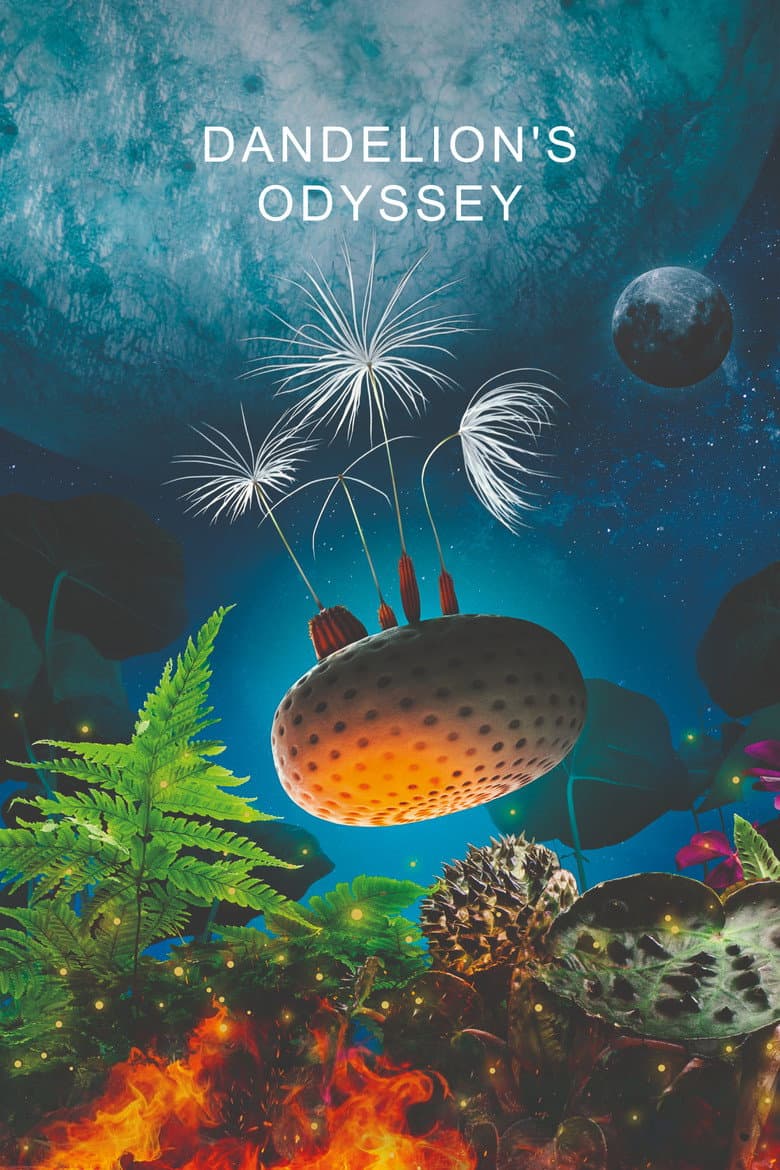
Dendelion, Baraban, Léonto, and Taraxa are four dandelion seeds that survive a chain of nuclear explosions that destroys Earth. The small friends are thrown through space and land on a strange planet filled with ice, fungi, insects, slugs, water, and desert. They search for soil where their kind can take root, grow, and continue. The film has no spoken dialogue, so movement, sound, music, and close views of nature show their fear, trust, loss, and courage. The mood is quiet, strange, beautiful, and sometimes sad, with danger beside wonder.
The clearest woke element is the film's ecological and migration message. The seeds are presented as natural migrants who must leave a ruined home and seek a safe place to live. Human destruction, damaged land, climate danger, and the need to care for nature shape the journey, while friendship and shared effort help the seeds survive. These ideas are central to the premise and repeat across the trip, but the film does not use human identity groups, spoken political arguments, or modern debates about race, gender, sexuality, or institutions. Its message stays broad and gentle, and the story remains a survival adventure about plants rather than a direct political drama.
Community feedback
Was our 17% Woke rating accurate?
Breakdown
These are the editorial factors and ratings behind our score for Dandelion's Odyssey.
Woke representation / casting
Not present. The visible characters are four animated dandelion seeds, not human performers in identity-marked roles. Four human performers helped shape their movements, and public material does not frame that work as a diversity message.
0%
Woke political dialogue
Not present. The film has no spoken dialogue or voice-over. Its ideas appear through images, sounds, and action rather than political speeches.
0%
Identity-driven story themes
The film makes environmental migration the central problem. The seeds leave a ruined Earth and search for safe soil, which connects survival to climate danger, movement, and the search for a home. The filmmakers describe the seeds as climate refugees and call for care, humility, and solidarity with nature. The message is broad and does not focus on race, gender, sexuality, or human identity groups.
25%
Western institutional / cultural critique
Nuclear explosions destroying Earth serve as the starting point for the plants' journey, but the narrative does not reframe this into modern activist critiques of capitalism, patriarchy, colonialism, whiteness, or current Western institutions. It remains a story-driven focus on natural adaptation and survival forces.
10%
Woke character or canon changes
Not relevant. The film is an original story about invented plant characters. It does not change established characters, source material, or real historical events for identity reasons.
0%
Anti-woke backlash and complaints
Not present. The supplied X research found no anti-woke reaction, and wider coverage found no meaningful complaints that the film pushes woke or DEI content. Audience discussion focused on art, pacing, and unusual imagery.
0%
Creator track record context
Momoko Seto has a low 11/100 creator context score. Her earlier films and CNRS science work focus on ecology, natural systems, and links between living things. The current film continues that mild ecological and solidarity focus, but it does not show a recurring identity-driven pattern. The other key writers and producers have low stored scores and no reported activist pattern.
11%
Production
Movie · 2024
In 1985, the murder of a government-sponsored superhero draws his outlawed colleagues out of retirement and into a mystery that threatens to upend their personal lives and the…
Movie · 2024
Now fully revealed as the ultimate threat to existence, the Anti-Monitor wages an unrelenting attack on the surviving Earths that struggle for survival in a pocket universe.
Movie · 2016
Robin is sent by Batman to work with the Teen Titans after his volatile behavior botches up a Justice League mission.
Movie · 2017
An animated telling of Kobe Bryant's titular poem, signaling his retirement from the sport that made his name.
Movie · 2022
In 1998, Beavis and Butt-Head are sentenced to Space Camp by a “creative” judge. Their obsession with a docking simulator (huh huh) leads to a trip on the Space Shuttle, with…
Movie · 2026
Science teacher Ryland Grace wakes up on a spaceship light years from home with no recollection of who he is or how he got there.

Movie · 2023
After it's discovered that a teacher at South Park Elementary has an OnlyFans page, Randy is compelled to take a closer look at the seedy underbelly of the world of online…

Movie · 2018
Batman, along with many of his allies and adversaries, finds himself transported to feudal Japan by Gorilla Grodd's time displacement machine.
