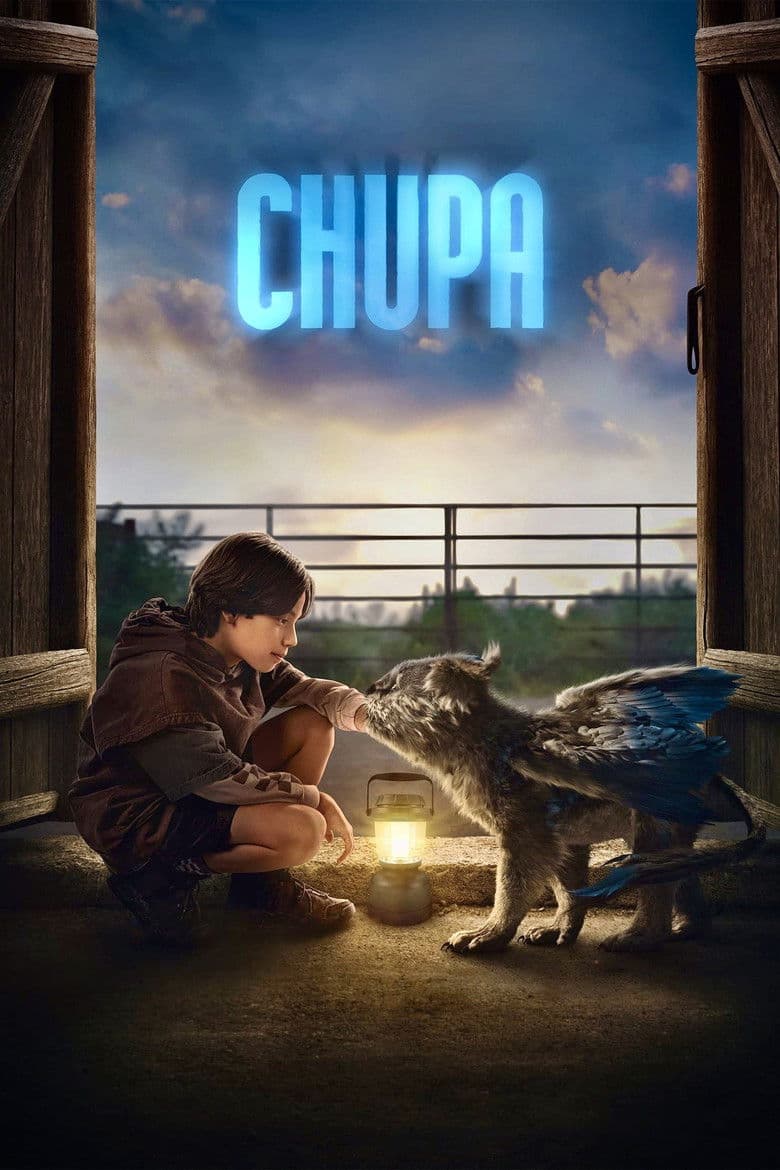
Alex is a lonely Mexican American boy from Kansas City. After his dad dies, he is sent to Mexico for spring break to stay with his grandpa and cousins. On the ranch he finds a baby chupacabra hiding in a shed. He and his family must keep the creature safe from a U.S. scientist who wants to catch it. The tone is warm, 1990s-style kids adventure, with family jokes, lucha libre, and light danger.
The film’s clearest social focus is cultural pride. Alex is bullied at school for being Mexican, then learns to love his roots through food, Spanish, family stories, and lucha libre. Director Jonás Cuarón has said he wanted to show and cheer many sides of Mexican culture. The villain is a white American government scientist who hunts the creature for healing power and profit, which some viewers will read as a soft “outsider exploits Mexico” beat. There is no queer storyline, no race or gender swap of a famous character, and no heavy activist lectures. A normal viewer mainly notices a heritage-and-family adventure with mild outsider-villain energy, not a loud identity campaign.
Community feedback
Was our 34% Woke rating accurate?
Breakdown
These are the editorial factors and ratings behind our score for Chupa.
Woke representation / casting
Mostly Mexican and Mexican American actors in a Mexico-set family story, so casting fits the world. Not a race or gender swap of a known white hero. Marketing and interviews stress Latin culture pride. Cousin Luna is bold but not a dominant girlboss lead. No queer casting. Light identity signal, not a quota-style cast in a mismatched setting.
24%
Woke political dialogue
Lines and scenes push pride in Mexican roots, bilingual family talk, and not being ashamed of culture. School bullies mock Alex for Mexican food and for being different. Soft family-movie messages more than long activist speeches.
30%
Identity-driven story themes
Alex’s personal arc is learning to love his Mexican heritage after grief and bullying. Food, Spanish, lucha libre, and family history sit next to the creature plot. Cuarón said he wanted to show and cheer Mexican culture. Strong, easy-to-see identity theme for a kids film, but classic “embrace your roots” more than modern queer or race-swap activism.
18%
Western institutional / cultural critique
The bad guy is a U.S. government scientist who wants a Mexican myth creature for medicine and money. White classmates bully Alex for being Mexican. That is light “outsider American bad” and mean-kids framing. Still mostly a chase adventure, not a hard lecture on empire, capitalism, or whiteness.
32%
Woke character or canon changes
Not relevant. Original family adventure. Turning the chupacabra cute is a tone choice for kids, not an identity rewrite of a known person or historical figure.
0%
Anti-woke backlash and complaints
No clear anti-woke wave called this film DEI or left propaganda. Online talk mostly mocked the Spanish title slang. Left-side notes that it lacked more diversity or harder anti-empire themes do not count for this score.
0%
Creator track record context
Cuarón has moderate progressive immigration framing in past work and sold Chupa as culture reconnection. Columbus and casting director Hool add mild progressive/diversity context. Most writers and other producers show little activist track record. Mild crew signal overall.
24%
Production
Movie · 2025
When a young girl’s sketchbook falls into a strange pond, her drawings come to life—chaotic, real, and on the loose.
Movie · 2018
Siblings Kate and Teddy try to prove Santa Claus is real, but when they accidentally cause his sleigh to crash, they have to save Christmas.
Movie · 2021
An ordinary young boy called Nikolas sets out on an extraordinary adventure into the snowy north in search of his father who is on a quest to discover the fabled village of the…

Movie · 2019
The untold true story set in the winter of 1925 that takes you across the treacherous terrain of the Alaskan tundra for an exhilarating and uplifting adventure that will test the…
Movie · 2020
After losing his wife seven years earlier, the eccentric Dr. John Dolittle, famed doctor and veterinarian of Queen Victoria’s England, hermits himself away behind the high walls…
Movie · 2020
Fueled by memories of her mother, resourceful Fei Fei builds a rocket to the moon on a mission to prove the existence of a legendary moon goddess.
Movie · 2018
Christopher Robin, the boy who had countless adventures in the Hundred Acre Wood, has grown up and lost his way.
Movie · 2022
Puss in Boots discovers that his passion for adventure has taken its toll: He has burned through eight of his nine lives, leaving him with only one life left.
