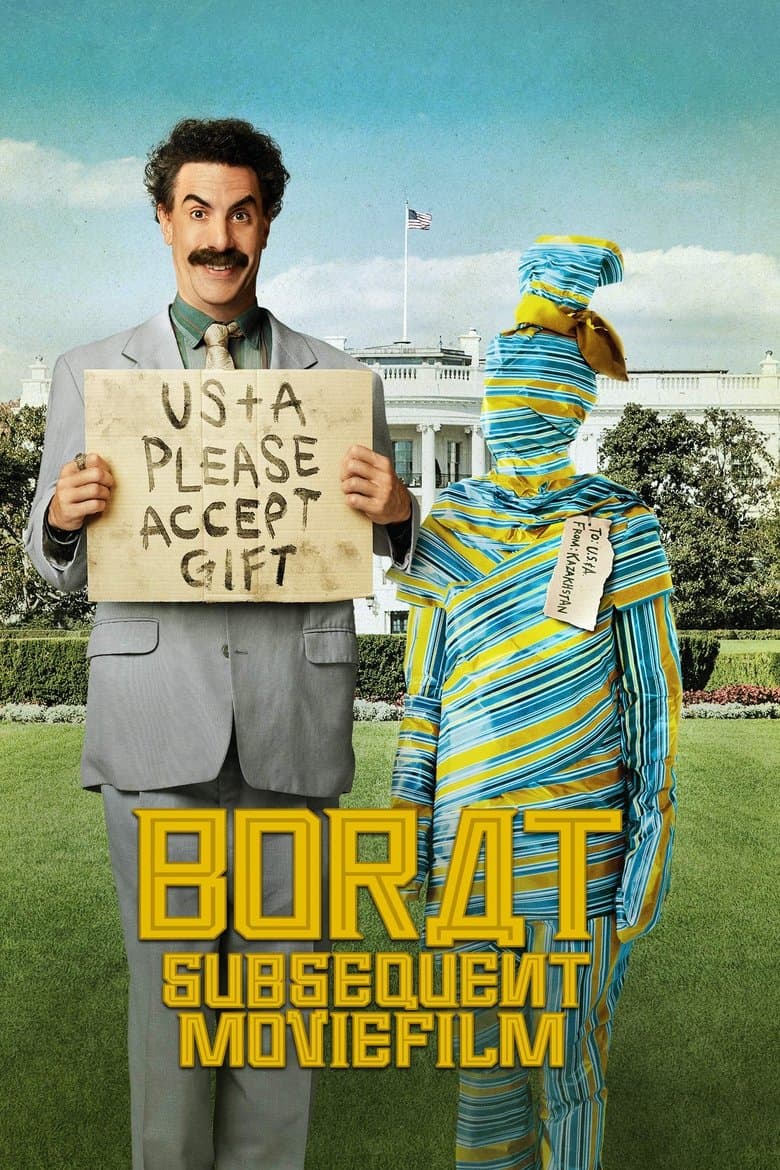
Movie review
October 23, 2020 · 96 min · R · Comedy
Borat returns to the United States with his teenage daughter Tutar during the COVID-19 pandemic and 2020 election to deliver a bribe to Trump administration figures, using hidden-camera pranks and crude satire to expose American culture and politics. The story centers on Tutar rejecting her father's misogynistic teachings after exposure to American influences, achieving personal autonomy and driving family reconciliation plus legal reforms against traditional gender roles in Kazakhstan. Recurring partisan political satire and pranks target Trump allies, QAnon believers, conservative rallies, and COVID denial as bigoted or dangerous, with explicit ideological framing on patriarchy and right-wing culture. The combination of gender empowerment arc, selective institutional critique, and election-timed political messaging creates strong, audience-visible activist emphasis.
Community feedback
Was our 87% Woke rating accurate?
Breakdown
These are the editorial factors and ratings behind our score for Borat Subsequent Moviefilm: Delivery of Prodigious Bribe to American Regime for Make Benefit Once Glorious Nation of Kazakhstan.
Woke representation / casting
No audience-visible forced diversity, identity signaling, or mismatches; Maria Bakalova as the foreign daughter and all other casting directly serves the established Kazakh stereotype satire without unearned emphasis.
10%
Woke political dialogue
Strong and recurring explicit political satire plus real pranks targeting Trump administration figures, QAnon, conservative rallies, and 2020 election issues as bigoted or dangerous; this forms a major narrative and marketing engine that average viewers clearly register as partisan.
75%
Identity-driven story themes
Prominent daughter subplot drives rejection of misogynistic patriarchal control, personal sexual and autonomy discovery, confrontation with male authority, and positive empowerment outcome including legal gender reforms; gender politics are central and recurring though framed through satire.
50%
Western institutional / cultural critique
Recurring modern activist-style framing of conservative American political culture and institutions as misogynistic, conspiratorial, and oppressive to women, with scenes highlighting male entitlement and traditional gender roles as flawed in right-leaning spaces.
60%
Woke character or canon changes
Not present in this title.
0%
Anti-woke backlash and complaints
Extensive conservative backlash and mainstream news framing the film as anti-Trump propaganda, election-timed left activism, and deceptive political hit piece, with specific outrage over the Giuliani scene and selective satire against right-wing audiences and figures.
68%
Creator track record context
Sacha Baron Cohen shows clear post-2016 pattern of politically charged anti-Trump and anti-conspiracy projects plus public statements; co-writer Jena Friedman has explicit feminist comedy background focused on misogyny and patriarchy critiques that directly support the film's gender and political elements.
75%
Production
Movie · 2016
A comedy that follows a group of friends as they navigate their way through the freedoms and responsibilities of unsupervised adulthood.
Movie · 2024
Inseparable best friends AJ and Moose decide to run the local pool's snack shack after their plan to sell home-brewed beer goes down the drain.
Movie · 2023
From his onstage tackle to the slap heard round the world, Dave Chappelle lets loose in this freewheeling and unfiltered stand-up comedy special.
Movie · 2022
Exploring every facet of ‘Weird Al’ Yankovic’s life, from his meteoric rise to fame with early hits like ‘Eat It’ and ‘Like a Surgeon’ to his torrid celebrity love affairs and…
Movie · 2018
Adam Sandler takes his comical musical musings back out on the road, from comedy clubs to concert halls to one very unsuspecting subway station.
Movie · 2023
A chaotic intervention. An action-packed stay in rehab. After a weird couple of years, John Mulaney comes out swinging in his return to the stage.
Movie · 2016
Two teenage boys from inner-city Cork steal bicycles and ride off on a 160km quest to find an unrecovered bale of cocaine worth 7,000,000 euros.
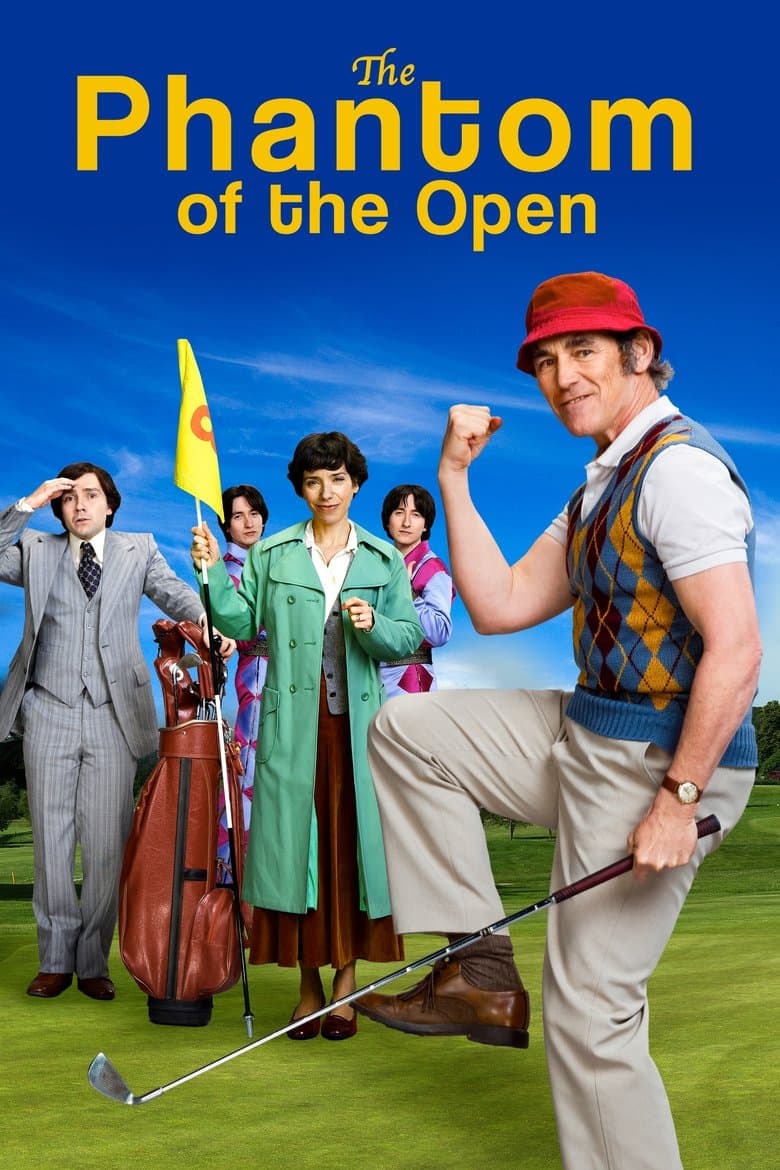
Movie · 2022
Maurice Flitcroft, a dreamer and unrelenting optimist, managed to gain entry to The British Open Golf Championship qualifying in 1976 and subsequently shot the worst round in Open…
