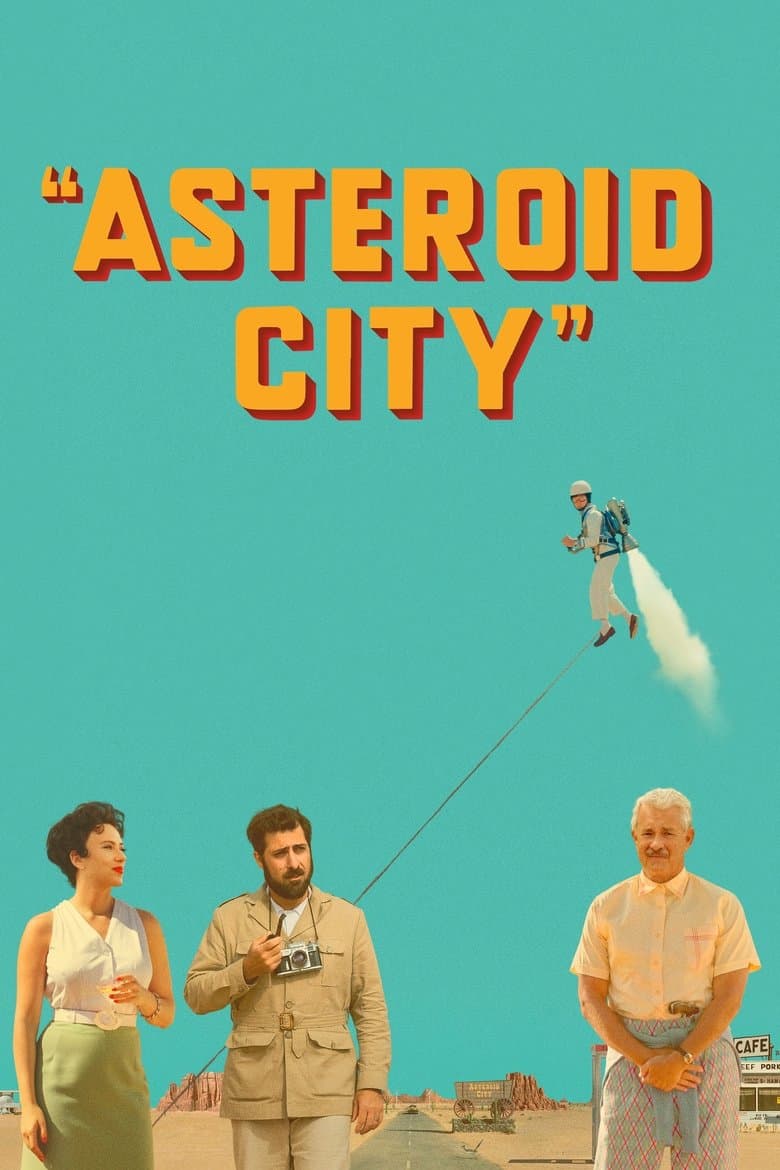
Wes Anderson's movie places a junior stargazer convention in a desert town next to atomic tests. That 1955 story sits inside a black and white TV documentary about staging a play. War photographer Augie Steenbeck hides his wife's death from his children. Movie star Midge Campbell shares her own sadness with him. An alien steals the meteorite, and the military locks everyone down and tries to hide the truth while grief, art, and questions about meaning run under the pastel comedy.
A gay playwright and an actor share a romantic kiss in the frame story, which shows they are lovers. That LGBTQ detail is real but secondary to the main desert plot about grief and the UFO. The 1955 Southwest cast includes Jeffrey Wright as a five-star general, Tilda Swinton as an observatory scientist, and Asian-American stargazer Ricky Cho among the gifted teens. Leading roles still mostly go to familiar Anderson stars. Military secrecy and quarantine work as period sci-fi farce rather than modern identity speeches.
Community feedback
Was our 29% Woke rating accurate?
Breakdown
These are the editorial factors and ratings behind our score for Asteroid City.
Woke representation / casting
The 1955 Southwest cast puts Jeffrey Wright as a five-star general, Tilda Swinton as the observatory scientist, and Asian-American Ricky Cho among the gifted teens. That mix goes beyond typical period military and science ranks. The film does not sell those choices as a diversity statement. Leading roles still mostly go to the usual Anderson white stars.
30%
Woke political dialogue
Talk stays in deadpan whimsy, grief, and sci-fi farce. Military quarantine and a presidential cover-up of the alien visit serve the plot. They are not modern identity or DEI speeches.
5%
Identity-driven story themes
The main desert story is about grief, performance, connection, and big questions after the UFO. It is not a race or gender activism arc. The black and white frame does show gay playwright Conrad Earp as lovers with actor Jones Hall through an on-screen kiss. That LGBTQ element is clear but not the center of the convention plot.
34%
Western institutional / cultural critique
Soft satire of military secrecy, quarantine, and government control after the sighting reads as period sci-fi farce. It also carries COVID-era quarantine texture. It is not a modern activist attack on masculinity, faith, or core Western culture.
12%
Woke character or canon changes
Not relevant. original story, not an identity rewrite of established characters or history.
0%
Anti-woke backlash and complaints
Not present. Public debate centered on style-over-substance and Anderson pastiche. Searches did not turn up a meaningful right-leaning campaign calling the film woke, DEI, or identity propaganda.
0%
Creator track record context
Cached scores for key creatives are low. Wes Anderson scores 5, Roman Coppola 6, Jeremy Dawson 9, Katharine Stocker 4, Steven M. Rales 21, Douglas Aibel 13, and Jennifer Furches 2. The project reads as a stylized collaboration without an activist identity portfolio.
8%
Production
Movie · 2018
Tony Lip, a bouncer in 1962, is hired to drive pianist Don Shirley on a tour through the Deep South in the days when African Americans, forced to find alternate accommodations and…

Movie · 2016
Aspiring New York City artist John Hollar returns to his Middle America hometown on the eve of his mother’s brain surgery.

Movie · 2023
The true story of how Dave Fishwick, a working class man and self-made millionaire, fought to set up a community bank so that he could help the local businesses of Burnley not…
Movie · 2017
When dictator Joseph Stalin dies, his parasitic cronies square off in a frantic power struggle to become the next Soviet leader.
Movie · 2016
The story of Florence Foster Jenkins, a New York heiress, who dreamed of becoming an opera singer, despite having a terrible singing voice.

Movie · 2022
The remarkable true story of how retiree Jerry Selbee discovers a mathematical loophole in the Massachusetts lottery and, with the help of his wife, Marge, wins $27 million…

Movie · 2018
An American hypochondriac who is working as a baggage handler is forced to confront his fears when a British teenager with a terminal illness enlists him to help her carry out her…
Movie · 2019
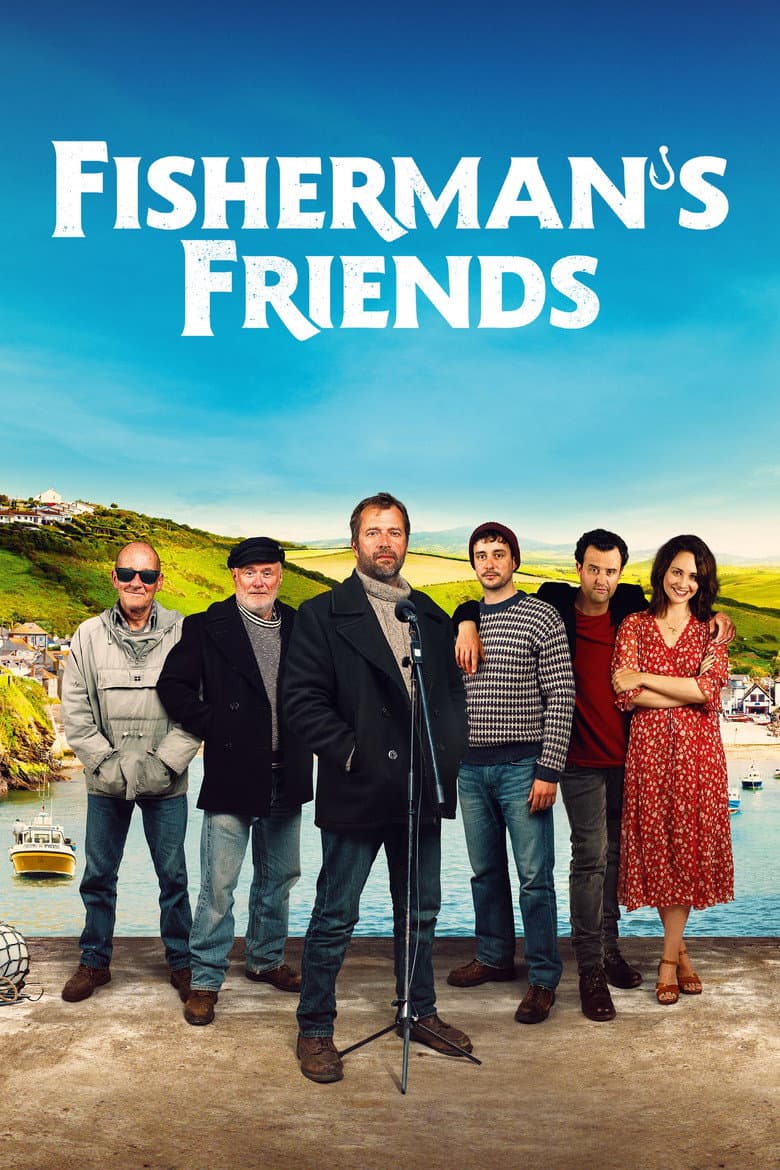
Ten fishermen from Cornwall are signed by Universal Records and achieve a top ten hit with their debut album of Sea Shanties.
