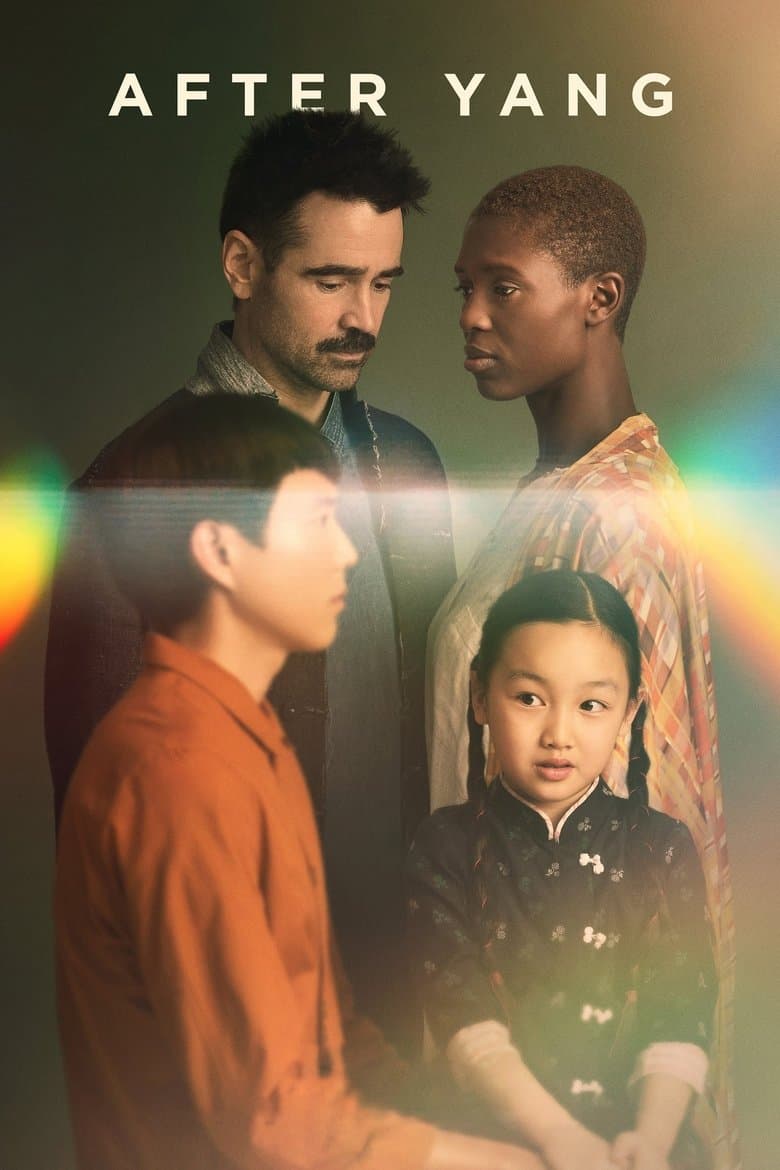
In a calm near-future world, Jake lives with his wife Kyra and their young daughter Mika. Mika’s closest friend is Yang, a lifelike android bought to help her feel tied to her Chinese roots. When Yang suddenly shuts down, Jake races to fix him. The search turns quiet and sad. Jake starts seeing his own life more clearly and tries to grow closer to his wife and daughter again.
A normal viewer would notice clear identity themes. The family is mixed on purpose: a white dad, a black mom, a Chinese adopted child, and an Asian-coded robot whose whole job is teaching Chinese culture. Yang’s “death” opens talks about heritage, belonging, and what counts as real family. Jake also faces his bias against human clones, shown like unfair group hate. The film is soft and emotional, not a loud protest movie, but race, culture, and who is “other” sit near the center of the story. Reviews and the filmmaker’s own talks often frame it as a film about Asian identity, not only robots and grief.
Community feedback
Was our 67% Woke rating accurate?
Breakdown
These are the editorial factors and ratings behind our score for After Yang.
Woke representation / casting
Lead family is clearly mixed: white father, black mother, Chinese adoptee, Asian-looking android. The Chinese parts fit the plot (heritage robot). The black mother is a strong visible diversity choice, especially next to the white couple in the source story. Diversity is designed and easy to see, not random extras.
48%
Woke political dialogue
Soft talks on roots, adoption, being Chinese, and treating clones as less than people. A crude repair man uses racist China-fear talk and spy fears about “foreign” models. No long activist speeches, but identity and bias lines are there.
32%
Identity-driven story themes
Core plot asks who belongs in a family and what makes someone Chinese or “real.” Yang exists to pass on Chinese culture. Memory and loss share the stage with heritage, adoption, and othering of clones. Many viewers and the filmmaker treat Asian identity as a main point, not a side note.
68%
Western institutional / cultural critique
Jake’s clone bias is framed as unfair group hate he should unlearn. Background war signs use old anti-Asian slogans. Tech companies hide memory chips. Mild social critique, not a full attack on the West, church, or free markets.
38%
Woke character or canon changes
Source parents are both white; the film makes the mother black. That is an identity-facing change to the family setup, not required by the robot plot alone. Yang stays a Chinese-coded cultural unit as in the story. Other changes are normal drama expansion.
40%
Anti-woke backlash and complaints
No clear right-leaning or anti-woke backlash wave. Coverage is mostly praise and soft debate about AI, grief, and Asian identity. No big “DEI propaganda” storm found.
0%
Creator track record context
Cached crew scores are mostly low to mid. Weinstein (30) and Cinereach’s Engelhorn (37) pull progressive; Kogonada (11) and craft-focused names stay lower. Fits quiet progressive-indie film, not a hard activist brand.
22%
Production

Movie · 2018
An astronomer becomes obsessed with searching the cosmos for signs of life beyond Earth which leads to a shocking discovery.
Movie · 2020
As the end approaches inexorably, the last humans, living millions of years into the future, send a message to the humanity of the present that is both a plea for help and a…

Movie · 2022
An endearing outlier, Brian lives alone in a Welsh valley, inventing oddball contraptions that seldom work. After finding a discarded mannequin head, Brian gets an idea.

Movie · 2021
Suzu is a 17-year-old high-school student living in a rural town with her father. Wounded by the loss of her mother at a young age, Suzu one day discovers the massive online world…

Movie · 2024
After a shipwreck, an intelligent robot called Roz is stranded on an uninhabited island. To survive the harsh environment, Roz bonds with the island's animals and cares for an…
