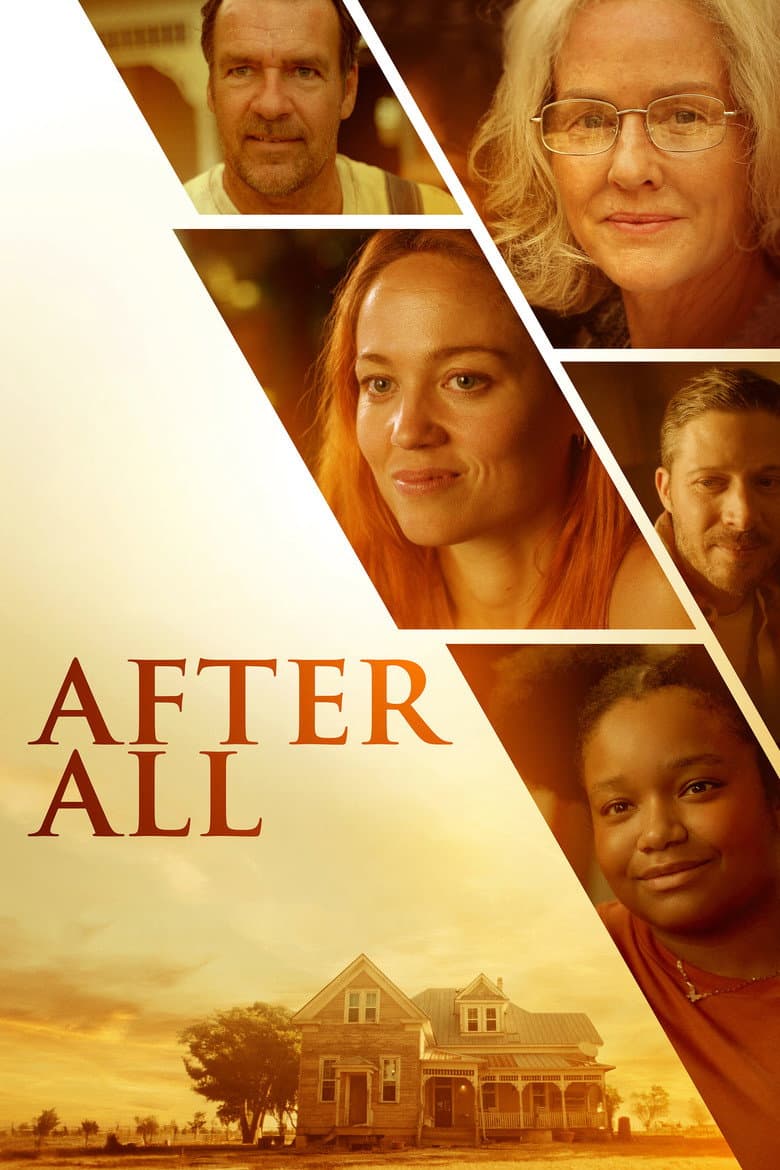
After All follows Ellen Sharpe, a troubled mother who returns from Austin to a small East Texas town. Her mother, Verna, has suffered a stroke and can no longer live safely alone. Ellen must care for Verna while trying to reconnect with Haley, her teenage daughter, who was raised by Verna. The film keeps a heavy but caring tone as the three women face grief, drinking, mental illness, abuse, and old family secrets.
The film places three generations of women at the center, and Haley is a black teenager in an interracial family. Her grandfather's racist abuse is part of the family's past, and school bullying also follows her. The story shows the women protecting one another while several men are absent, unreliable, or tied to violence and old ideas about manhood. These identity and gender elements are easy to notice, but the main story stays focused on family pain, caregiving, forgiveness, and healing.
Community feedback
Was our 30% Woke rating accurate?
Breakdown
These are the editorial factors and ratings behind our score for After All.
Woke representation / casting
The film centers on three women, including Kiara Muhammad as Haley, the Black teenage daughter in an interracial family. Haley's family history and her grandfather's racist abuse make the casting part of the story. Haley is shown as a bullied, self-conscious teen rather than a special expert or leader. The identity signal is visible but tied to the family's history.
22%
Woke political dialogue
Not present. The film includes racist and sexist insults in family memories, a store scene, and school bullying. Those lines show personal abuse and old family beliefs, not activist or political arguments.
0%
Identity-driven story themes
The film follows three generations of women dealing with caregiving, grief, drinking, mental illness, bullying, and family abuse. It also makes Haley's race part of the family history because her grandfather attacks her as a black child and the women protect her. Body image and identity worries add another layer to Haley's school problems. The story returns mainly to forgiveness and family repair, so the identity material is meaningful but not the main message.
28%
Western institutional / cultural critique
The film repeatedly links family harm to Walter's violent behavior, racism, and old beliefs about what makes a man. The women do most of the protecting, care work, and emotional repair, while several men are absent or unreliable. The film treats these problems as family history rather than a broad attack on men, patriarchy, or Western institutions.
18%
Woke character or canon changes
Not relevant. The film is an original family drama drawn from Jack Bryant's family and childhood. It does not rewrite known characters, canon, or public historical figures.
0%
Anti-woke backlash and complaints
Not present. Reviews and audience comments focus on acting, pace, melodrama, and family trauma rather than claims that the film pushes woke or DEI ideas. The separate X research pass found no anti-woke reaction.
0%
Creator track record context
Director Kerstin Karlhuber and writer Jack Bryant previously made Fair Haven, a drama about conversion therapy, same-sex identity, and family pressure. Producer Erika Christensen has supported abortion access, and producer Tom Malloy worked on Fair Haven. The current film is mainly about family trauma and forgiveness, so this history raises the context score without making the movie strongly identity-driven.
42%
Production
Movie · 2016
James Bowen, a homeless busker and recovering drug addict, has his life transformed when he meets a stray ginger cat.
Movie · 2024
19 year old Isaiah Wright lives for basketball and video games. A year out of high school, he has no job, no plans, and no idea how to be a man.

Movie · 2017
The behind the scenes story of the life of A.A. Milne and the creation of the Winnie the Pooh stories inspired by his son Christopher Robin.
Movie · 2016
When Christy discovers her 10-year-old daughter Anna has a rare, incurable disease, she becomes a ferocious advocate for her daughter’s healing as she searches for a solution.
Movie · 2021
When Sara hears a preacher say faith can move mountains, she starts praying. Suddenly people in her town are mysteriously healed!

Movie · 2022
Chasing his dream to join an elite K-9 unit, a state trooper partners with a fellow underdog: clever but naughty shelter pup Ruby. Based on a true story.
Movie · 2016
The incredible true story of the greatest walk-on in the history of college football.

Movie · 2021
The true story of Kurt Warner, who went from a stockboy at a grocery store to a two-time NFL MVP, Super Bowl champion, and Hall of Fame quarterback.
