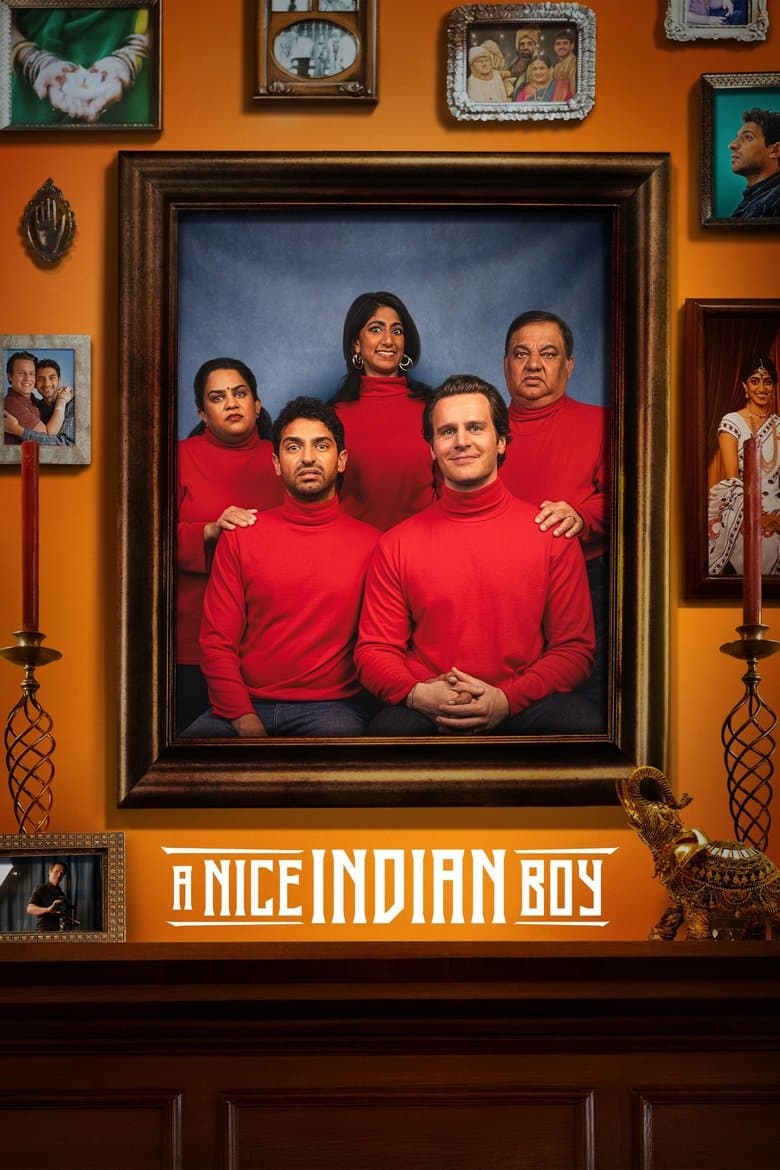
Naveen Gavaskar is a shy Indian American doctor who has kept his love life away from his traditional family. He meets Jay, a friendly white photographer who was adopted by Indian parents, and the two become engaged. The story moves between a hospital, a Hindu temple, and the family home in the United States. Naveen brings Jay home, where the family must deal with their son's partner and their plan for a Hindu wedding. The movie uses jokes, romance, Bollywood-style songs, and family arguments to tell a warm story about love and belonging.
The movie puts a gay Indian man at the center of a romantic comedy and makes his same-sex relationship the main source of romance and conflict. Naveen wants his family to accept Jay and to let them marry within Indian traditions. The parents' silence, worries about public shame, and questions about a wedding for two men create the main family struggle. The story presents open love, personal choice, and family acceptance as the happy answer, so queer identity and cultural representation are central rather than brief side details.
Community feedback
Was our 83% Woke rating accurate?
Breakdown
These are the editorial factors and ratings behind our score for A Nice Indian Boy.
Woke representation / casting
Naveen is a gay Indian American doctor and the central hero. Jay is his white fiancé, and the family is made up mainly of Indian American characters. The film makes the couple’s race and sexuality visible parts of the story, including the conflict over an Indian wedding for two men. Interviews also frame the pairing as queer South Asian representation, while Jay’s adoption gives his cultural link a story reason.
70%
Woke political dialogue
The film has several direct talks about gay life and family acceptance. Megha retells Milk and discusses a man who killed Harvey Milk because he disliked gay people. The wedding planning includes jokes about a gay wedding, two grooms, and which man is the bride. These moments are brief and personal, and the film has no long speech about laws, parties, or wider political systems.
22%
Identity-driven story themes
Naveen’s gay identity drives the main story. His love for Jay, fear of public judgment, and wish for a Hindu wedding shape his choices and growth. His parents move from quiet tolerance to open support, and the ending celebrates their marriage. Queer love, family acceptance, and cultural belonging are the movie’s main subjects.
92%
Western institutional / cultural critique
The family treats arranged marriage, public image, and gendered wedding roles as old rules that can hurt people. Arundhathi rejects a loveless marriage, and Naveen rejects hiding his relationship. The ending favors open choice and equal marriage over silence and forced adjustment. The movie does not attack Western institutions or present a broad system-level campaign.
31%
Woke character or canon changes
Not relevant. The film is based on Madhuri Shekar’s stage play, not an established franchise. Its added wedding material expands the plot without changing a famous character or real event.
0%
Anti-woke backlash and complaints
Not present. No sustained anti-woke or right-leaning complaint was reported. The main public dispute involved criticism of Indian censorship, not claims that the film pushes woke politics.
0%
Creator track record context
Roshan Sethi and Eric Randall have strong queer and identity-focused work histories. Karan Soni is openly gay and has spoken about queer South Asian representation, and he produces and stars in this film. Sethi’s interviews connect the story to his own coming-out experience and hopes for family acceptance. The other producers have mixed records, so the context is strong but not uniform across the whole team.
72%
Production
Movie · 2024
In the summer of 1986, three sixteen year old friends spend their Saturdays sneaking into movies at the local multiplex.
Movie · 2026
A happily engaged couple is put to the test when an unexpected turn sends their wedding week off the rails.
Movie · 2020
An on-the-lam punk rocker and a young woman obsessed with a local band go on an unexpected and epic journey together through the decaying suburbs of the American Midwest.
Movie · 2022
Peter and Emma thought they were on the precipice of life’s biggest moments – marriage, kids, and houses in the suburbs – until their respective partners dumped them.

Movie · 2023
After a disastrous first date, wild-child Nicole and socially-anxious Max vow to lose each other’s numbers until they learn that their dogs found a love match, and now puppies are…
Movie · 2025
Dawn thinks she's joining a dating show in Paris, France, only to land in Paris, Texas. She has an exit plan — until sparks fly with the cowboy bachelor.

Movie · 2022
Students Hayley and James are young and in love. After saying goodbye for Christmas at a London train station, they both make the same mad split-second decision to swap trains and…
Movie · 2022
Two strangers believe in love but never seem to be able to find its true meaning. In a wild twist of events, fate puts each in the other's path on one stormy New Year's Eve.
