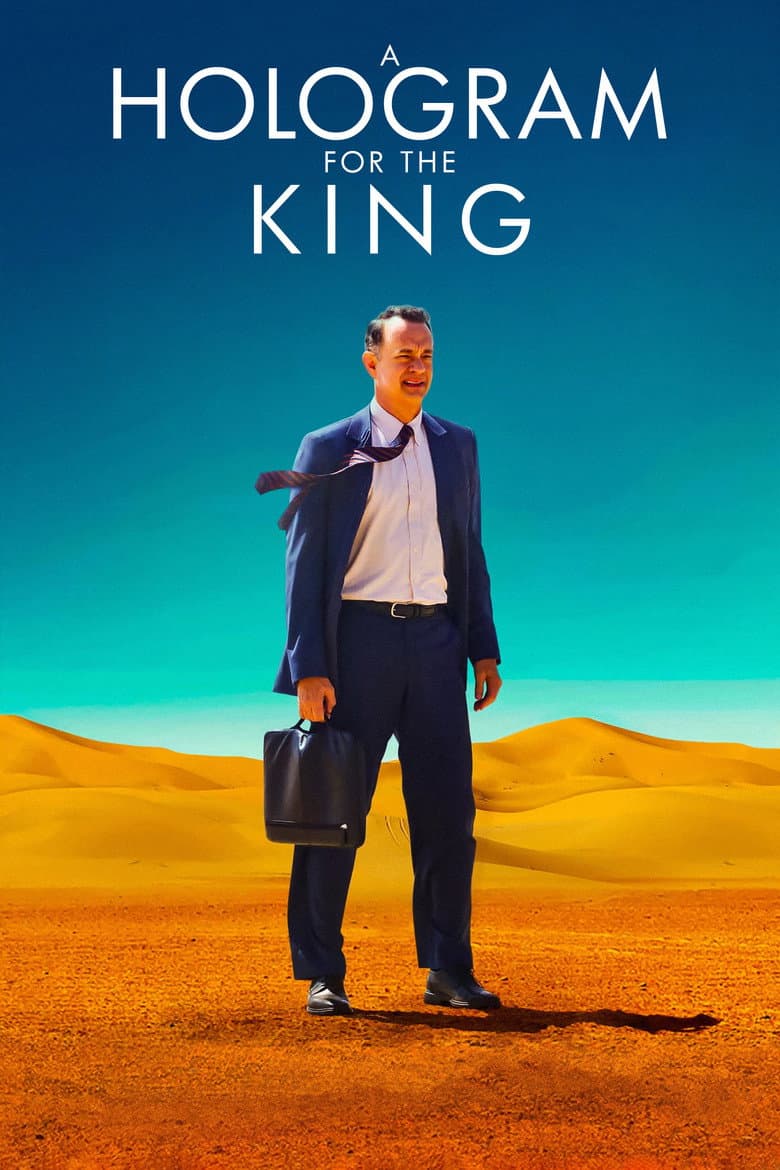
Alan Clay is a struggling American salesman who goes to Saudi Arabia to sell hologram technology to the King. He waits for days in a half-built desert city while his team has no real power or comfort. He carries guilt from helping move American factory jobs overseas. He meets a cab driver, fails with a Danish executive, and grows close to a Saudi surgeon who treats him. A cheaper Chinese bid wins the deal. He stays to sell condos, helps pay for his daughter's college, and starts a private romance with the doctor.
What audiences see of progressive material is modest and personal. A skilled Saudi woman doctor lives a dual life with career, divorce, and private desire. Their bond is framed as stronger than political and religious borders. The story also shows soft critique of American industrial decline and empty corporate sales life. Saudi elite hypocrisy appears as setting color, not a lecture. The main story stays a midlife and economic parable about reinvention, not identity politics as the engine.
Community feedback
Was our 28% Woke rating accurate?
Breakdown
These are the editorial factors and ratings behind our score for A Hologram for the King.
Woke representation / casting
The cast fits the Saudi and expat setting. A skilled Saudi woman surgeon is the love interest and healer. That is a mild progressive signal from status and intercultural romance, not a U.S. quota ensemble. A South Asian actress plays the Saudi doctor as story casting, not DEI friend-group engineering.
20%
Woke political dialogue
Alan names guilt over shipping American jobs to China. Sales banter stays empty and ordinary. The talk is classic economic worry. It is not DEI slogans about race, gender, or queerness.
12%
Identity-driven story themes
A progressive Muslim professional woman leads a dual life of career, divorce, and private sexuality. Human connection is framed as stronger than political and religious borders. The film is still a midlife and economic parable first. Identity supports the story rather than driving it.
28%
Western institutional / cultural critique
The film soft-critiques American industrial decline, hollow corporate sales culture, and recession malaise. Saudi elite hypocrisy about alcohol is shown as local color. Alan’s failures read as personal and economic. It is not a toxic-masculinity or colonial-guilt lecture.
22%
Woke character or canon changes
Not relevant. Straightforward Eggers adaptation with no reported identity-driven race or gender swaps of established characters or historical figures.
0%
Anti-woke backlash and complaints
Not present. No meaningful right-leaning or “too woke” campaign found in news or X searches. Left-side casting complaints are excluded from this score by the review rules.
0%
Creator track record context
Weight falls on Tom Tykwer as writer-director with occasional left-leaning commentary, MeToo and festival politics, and socially themed work. Producers and tech crew score lower. The overall creative context is mildly progressive, not an activist slate.
20%
Production
Movie · 2020
Scott has been a case of arrested development ever since his firefighter father died when he was seven. He's now reached his mid-20s having achieved little, chasing a dream of…

Movie · 2024
Mismatched cousins David and Benji reunite for a tour through Poland to honor their beloved grandmother. The adventure takes a turn when the pair's old tensions resurface against…
Movie · 2021
In 1961, a 60-year-old taxi driver stole Goya’s portrait of the Duke of Wellington from the National Gallery in London.

Movie · 2019
An unlikely friendship between two neighbors becomes an unexpectedly emotional journey when the younger man is diagnosed with terminal cancer.

Movie · 2024
Emotions run high when three estranged sisters reunite in a cramped New York City apartment to watch over their ailing father during his final days.
Movie · 2018
In 1990s Los Angeles, a 13-year-old spends his summer navigating between a troubled home life and a crew of new friends he meets at a skate shop.

Movie · 2022
Two lifelong friends find themselves at an impasse when one abruptly ends their relationship, with alarming consequences for both of them.

Movie · 2017
An aspiring actor in Hollywood meets an enigmatic stranger by the name of Tommy Wiseau, the meeting leads the actor down a path nobody could have predicted; creating the worst…
