Movie review
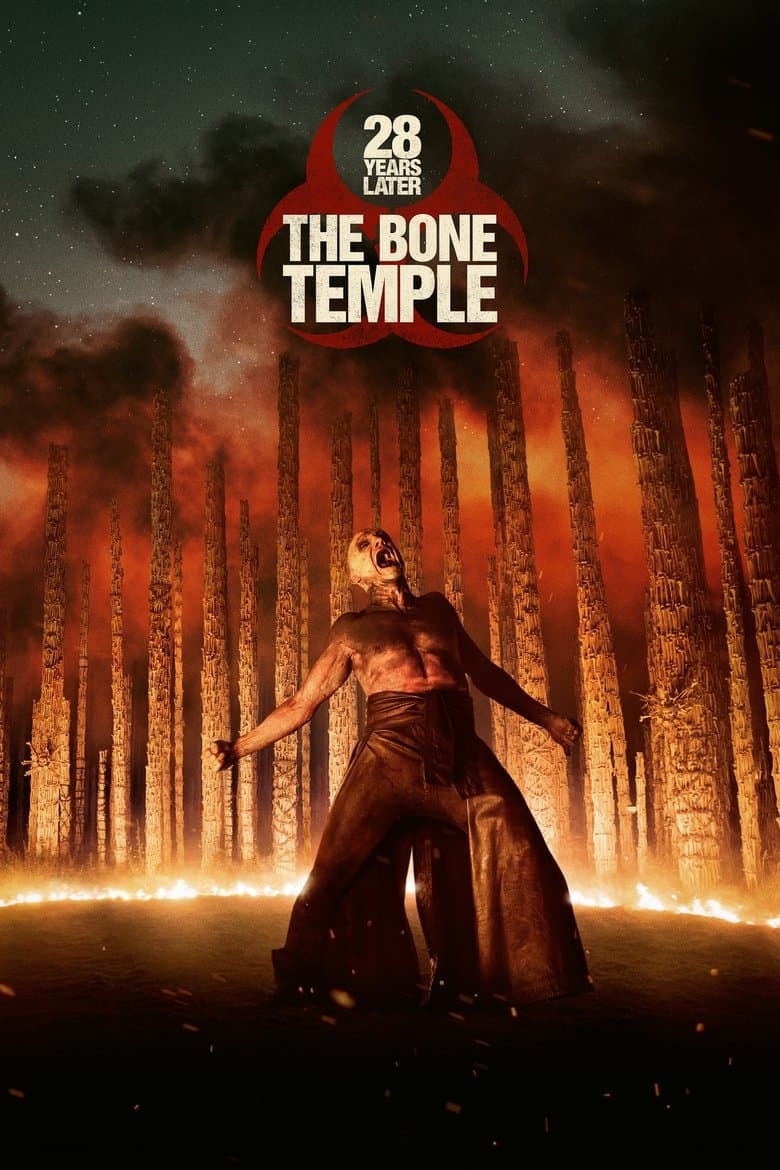
Spike is a young survivor who is trapped by Jimmy Crystal and his violent gang after the first film. The group forces him to join its Satanist cult while it travels through post-apocalyptic Scotland and attacks other survivors. Dr. Ian Kelson studies Samson, a huge infected man, and tries to bring back the person he once was. The story is bloody, strange, and often darkly funny, but it also makes room for fear, grief, kindness, and hope.
The most visible woke elements come from the cast and the story's view of power. Chi Lewis-Parry plays Samson as a major black character whose lost humanity becomes central to Kelson's work, while Erin Kellyman and Emma Laird play important female cult fighters. Maura Bird's Jimmy Jones is presented with gender-neutral language, which adds a small non-binary element. The film also sets Jimmy's cruel faith against Kelson's humanist science, but it does not build its message around race, sexuality, current politics, or a modern social campaign.
Community feedback
Was our 37% Woke rating accurate?
Breakdown
These are the editorial factors and ratings behind our score for 28 Years Later: The Bone Temple.
Woke representation / casting
Chi Lewis-Parry, a black actor, plays Samson, a major infected character whose return to humanity drives Kelson's work. Erin Kellyman and Emma Laird play important female fighters in the cult. Maura Bird's Jimmy Jones is treated with they and them language and adds a small non-binary element. The film does not market these choices as a diversity message, so the signal is noticeable but not central.
36%
Woke political dialogue
Not present in this title.
0%
Identity-driven story themes
Jimmy Jones is presented with they and them language, giving the film a brief non-binary identity element. The character stays inside the cult and does not receive an identity-based speech or personal arc. The main story remains about cult violence, humanism, and the possible recovery of the infected.
14%
Western institutional / cultural critique
Jimmy Crystal turns Satanist belief, charity, church images, and an upside-down cross into tools for control and torture. Kelson answers that cruelty with humanism, science, memory, and care for Samson. DaCosta also compares Jimmy's cult dogma with the military's dogma from the first film. The criticism targets cruel belief and power in the story, not current politics, patriarchy, or a broad attack on ordinary families.
28%
Woke character or canon changes
Not relevant. No established franchise characters or real historical figures altered for DEI or identity reasons; all elements are new to this entry.
0%
Anti-woke backlash and complaints
One fringe site called the film a woke bait-and-switch and a woke feminist movie because the story moves from father-son bonding toward new role models and family ties. A few Reddit comments repeated broad woke complaints, but they mostly objected to the film's tone and lack of zombie action. Mainstream reviews and large fan threads mostly praised the gore, performances, or humanist story. The anti-woke response is real but small and fringe.
15%
Creator track record context
Nia DaCosta has the strongest context because her earlier Candyman focused on racial injustice and she has discussed joining Black Lives Matter marches. Alex Garland has used political ideas in his work, but he also stresses doubt and warns against extremism on both sides. Danny Boyle has described himself as left-leaning and has spoken about cultural identity in casting. The other named producers have little public activist history. The film itself focuses on cults, faith, and humanism rather than identity politics.
33%
Production
Movie · 2018
Held captive in a futuristic smart house, a woman hopes to escape by befriending the A.I. program that controls the house.

Movie · 2020
A group of World War II American soldiers encounter a supernatural enemy as they occupy a French castle previously under Nazi control.
Movie · 2017
Two brothers return to the cult they fled from years ago to discover that the group's beliefs may be more sane than they once thought.
Movie · 2018
Set in the small town of Devil's Gate, North Dakota, the film examines the disappearance of a local woman and her young son.
Movie · 2024
As New York City is invaded by alien creatures who hunt by sound, a woman named Sam fights to survive with her cat.
Movie · 2018
After waking up to find himself all alone in an apartment where a massive party was being held the night before, Sam is immediately forced to face a terrifying reality: the living…

Movie · 2020
Two New Orleans paramedics' lives are ripped apart after encountering a series of horrific deaths linked to a designer drug with bizarre, otherworldly effects.

Movie · 2016
A woman struggles to survive on her own in the wake of a mysterious epidemic, which has decimated society and forced her deep into the unforgiving wild.
