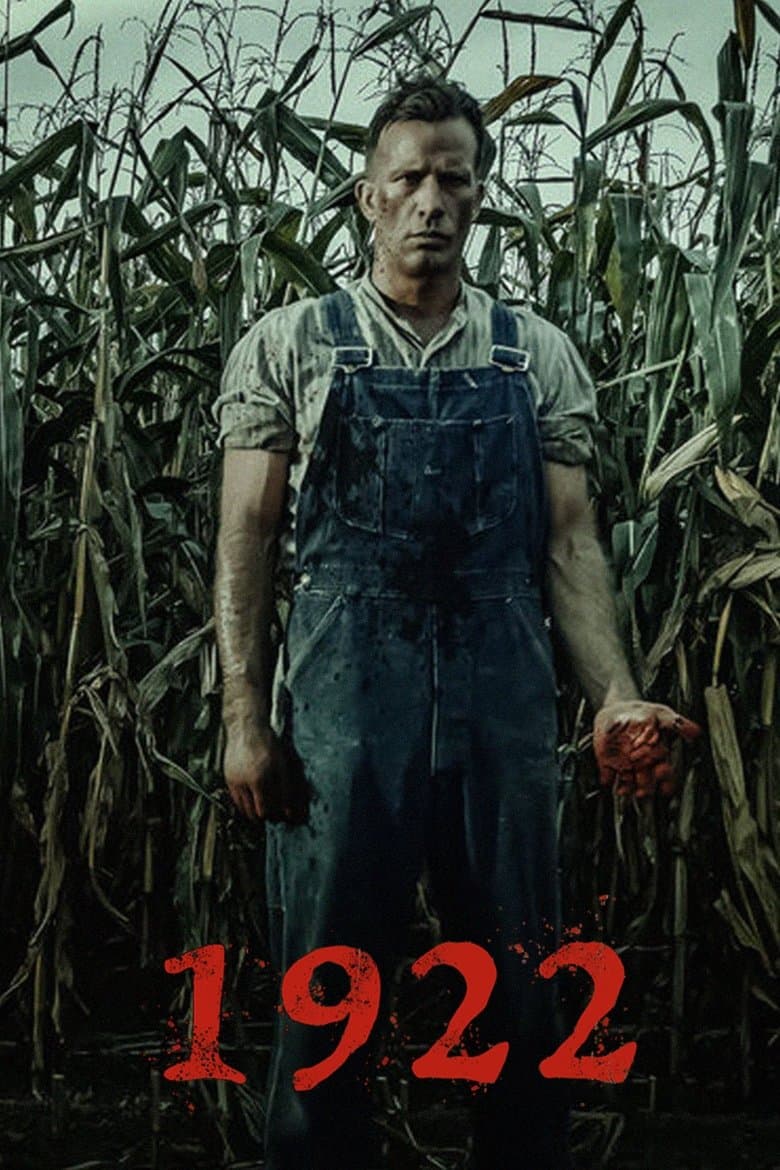
Wilfred James is a proud farmer in rural Nebraska in 1922. His wife, Arlette, wants to sell the land she inherited, move to Omaha, and open a dress shop. Wilfred fears losing the farm, his son Henry, and the life he thinks belongs to him, so he pulls Henry into a plan to kill her. The film follows the crime through Wilfred’s confession as guilt, rats, and strange visions destroy the family.
The film presents Arlette’s wish to leave the farm, while Wilfred treats her choice as a threat to his authority. The story shows that his male entitlement and rigid family rules cause violence and loss. These gender ideas sit inside a period crime and horror story, and they do not take over the film. The main themes are greed, family betrayal, guilt, punishment, and the damage caused by pride.
Community feedback
Was our 15% Woke rating accurate?
Breakdown
These are the editorial factors and ratings behind our score for 1922.
Woke representation / casting
Not present. Casting matches the 1922 rural Nebraska farm setting with appropriate white actors in all lead roles; no audience-visible diversity emphasis or story-world mismatches.
0%
Woke political dialogue
Not present. No political, activist, or social-justice dialogue exists; the story stays on personal murder, guilt, and psychological horror.
0%
Identity-driven story themes
The film centers on Arlette’s wish to leave the farm and control the land she inherited. Wilfred treats her choice as a threat to his authority and uses Henry’s love for Shannon to gain his help. The story punishes Wilfred’s control, but the gender conflict stays inside a period crime and horror tale.
13%
Western institutional / cultural critique
The film presents Wilfred’s belief that a man owns the land, the home, and his family as a cause of violence. Arlette’s legal right to her inherited land and her plan for a new working life challenge that household order. The story criticizes male entitlement and rigid gender roles, but it does not attack Christianity or Western institutions through a modern activist message.
16%
Woke character or canon changes
Not relevant. the film is a faithful adaptation of King's novella with no identity-driven alterations to characters or source material.
0%
Anti-woke backlash and complaints
Not present. No anti-woke or right-leaning complaints exist about identity politics or DEI messaging; reception stayed entirely on horror and performance merits.
0%
Creator track record context
Stephen King has publicly supported Democratic causes and criticized Donald Trump. His fiction and this film are not built around modern identity politics, DEI, or queer activism. Zak Hilditch and the other cached crew summaries show no comparable activist pattern tied to this title.
18%
Production
Movie · 2017
A young nurse is kidnapped by a group of violent teens who escape from a mental hospital and take her on the road trip from hell.
Movie · 2018
William has a simple job: he makes dead bodies disappear. His daughter Gloria has become used to rough-looking men dropping off corpses, and is even convinced that some of them…
Movie · 2018
A thief makes a disturbing discovery in the house where he breaks in. Later, when he returns to the same house with his partner in crime, things are no longer how he expected.
Movie · 2018
Failed architect, engineer and vicious murderer Jack narrates the details of some of his most elaborately orchestrated crimes, each of them a towering piece of art that defines…
Movie · 2016
In a small Midwestern town, a troubled teen with homicidal tendencies must hunt down and destroy a supernatural killer while keeping his own inner demons at bay.
Movie · 2023
On the day of his scheduled execution, a convicted serial killer gets a psychiatric evaluation during which he claims he is a demon, and further claims that before their time is…
Movie · 2017
In a small town in Maine, seven children known as The Losers Club come face to face with life problems, bullies and a monster that takes the shape of a clown called Pennywise.
Movie · 2016
An orphaned child's dreams—and nightmares—manifest physically as he sleeps.
